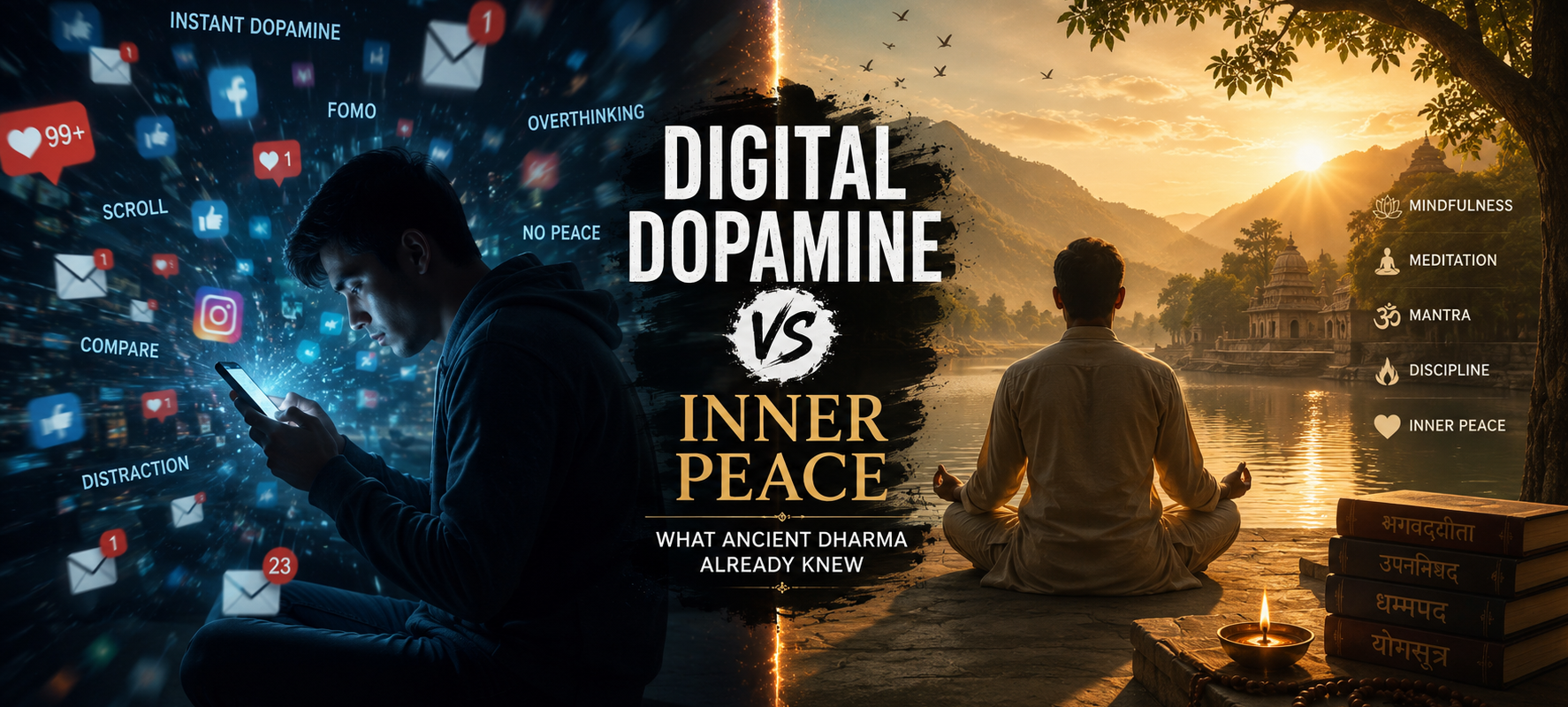
In today’s digital world, constant scrolling, notifications, and instant gratification are quietly exhausting the human mind. This blog explores how ancient Dharmic wisdom already understood the dangers of distraction, sensory overload, and restless desires long before smartphones existed. By connecting modern dopamine addiction with timeless practices like meditation, silence, mantra chanting, and mindful living, the article reveals how inner peace can still be reclaimed in an overstimulated world.
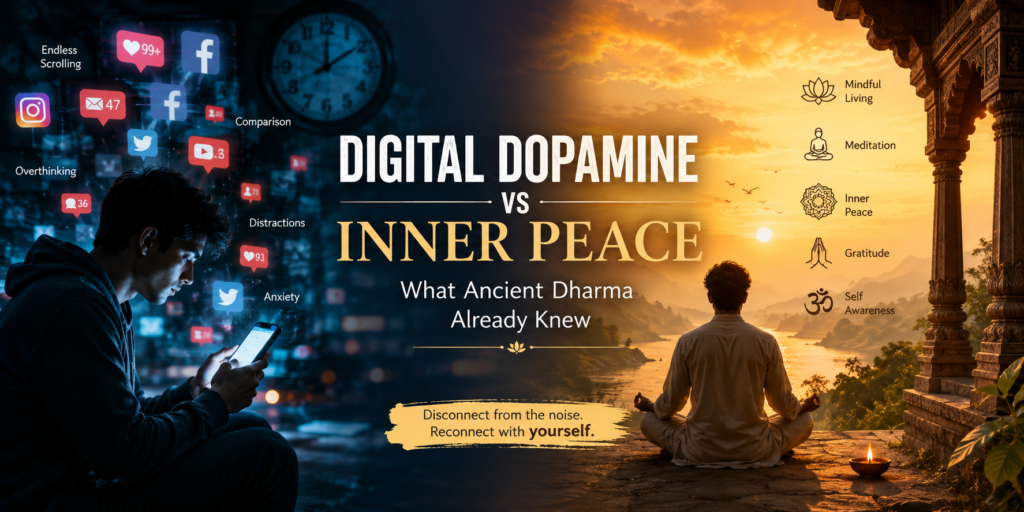
Introduction: We Are Entertained More Than Ever — Yet Peaceful Less Than Ever

A few minutes on social media turns into an hour.
One notification becomes ten.
We unlock our phones without reason, scroll without purpose, and somehow end the day mentally exhausted — even when we barely moved physically.
Modern life has created a strange contradiction:
We have unlimited entertainment, but shrinking attention spans.
Thousands of online connections, but increasing loneliness.
Constant stimulation, but very little inner peace.
This is what modern psychology now calls dopamine overload.
But what’s fascinating is this:
Ancient Dharmic traditions understood this restless human mind thousands of years ago — long before smartphones, reels, or algorithms existed.
The sages may not have known Instagram, but they deeply understood distraction, desire, attachment, and mental agitation.
And perhaps that wisdom has become more relevant today than ever before.
What is “Digital Dopamine”?
The Pleasure Loop of Modern Technology

Dopamine is often called the “feel-good chemical,” but it is actually more connected to anticipation and craving than happiness itself.
Every time you:
- refresh your notifications,
- receive a like,
- watch short-form videos,
- switch between apps,
- or endlessly scroll,
your brain receives tiny dopamine hits.
The problem is not dopamine itself.
The problem is constant artificial stimulation.
Over time, the mind becomes addicted to novelty.
Silence feels boring.
Stillness feels uncomfortable.
Deep focus becomes difficult.
This is why many people today struggle to:
- sit quietly,
- read books,
- meditate,
- pray with concentration,
- or even complete one task without checking their phone.
Ancient Dharma Already Described This Restless Mind
The Bhagavad Gita on Mental Restlessness
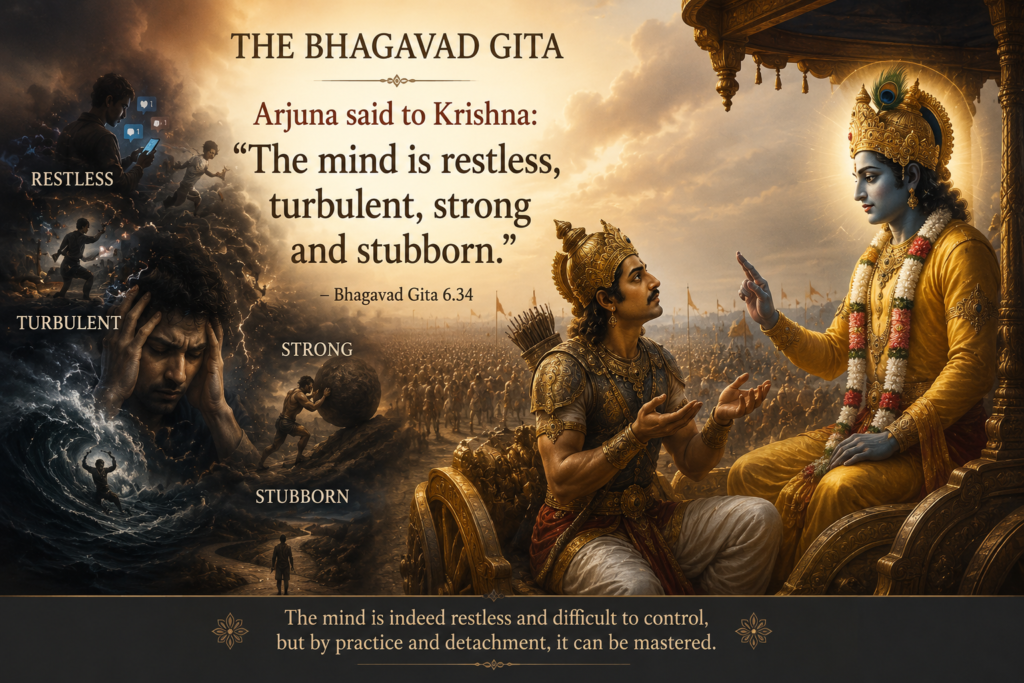
In the Bhagavad Gita, Arjuna says to Krishna:
“The mind is restless, turbulent, strong and stubborn.”
That line feels incredibly modern.
The human mind has always chased stimulation.
Today, technology simply amplifies it.
Ancient Dharma repeatedly warned about:
- uncontrolled desires,
- sensory overload,
- endless cravings,
- attachment to pleasure,
- and loss of inner awareness.
In Dharmic philosophy, the senses constantly pull the mind outward.
Today’s digital world is built entirely around that principle.
Every app competes for:
- your attention,
- your emotion,
- your time,
- and your mental energy.
The Attention Economy vs Inner Peace

Modern platforms are not designed to calm the mind.
They are designed to keep you engaged.
The longer you stay online:
- the more ads you see,
- the more content you consume,
- and the more profitable your attention becomes.
This creates what many psychologists call the attention economy.
But Dharma teaches the opposite direction.
Instead of constantly moving outward, ancient spiritual practices guide awareness inward.
That is why practices like:
- meditation,
- mantra chanting,
- mindful breathing,
- silence,
- fasting,
- and prayer
have existed for thousands of years.
Not as “religious rituals only” —
but as technologies for mental balance.
Real-Life Examples We See Today

1. The Morning Phone Habit
Many people wake up and immediately check:
- WhatsApp,
- Instagram,
- emails,
- news,
- or YouTube.
Before the mind even settles, it becomes flooded with stimulation.
Compare this with traditional Dharmic routines:
- waking before sunrise,
- silence,
- prayer,
- copper water,
- mantra chanting,
- sun exposure,
- mindful breathing.
One routine feeds restlessness.
The other creates grounding.
Short Attention Spans

A student cannot focus on studies for 20 minutes without checking their phone.
A professional switches between five apps during work.
Even watching a full movie now feels “slow” for many people.
This is not laziness alone.
It is mental conditioning.
Ancient sages emphasized:
- discipline of attention,
- control over senses,
- and single-pointed focus.
Because where attention goes, energy follows.
Emotional Exhaustion from Social Comparison

Scrolling often creates invisible emotional pressure:
- “Everyone else is happier.”
- “Everyone else is succeeding.”
- “My life is behind.”
But social media mostly shows edited moments, not complete realities.
Ancient Dharma repeatedly warned against attachment to external validation.
Inner worth was never meant to depend on public approval.
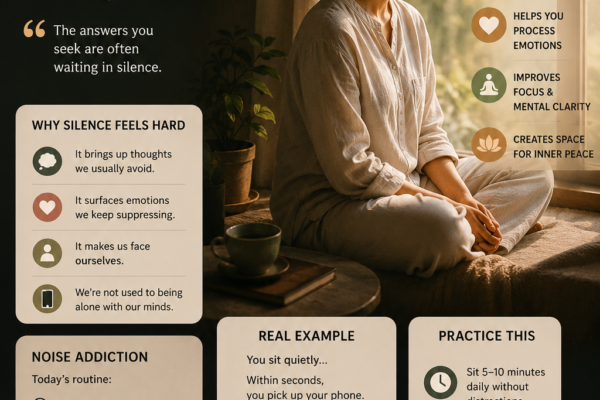
Why Silence Feels Uncomfortable Today

Many people today cannot sit in silence for even ten minutes.
The moment silence appears, the mind rushes to:
- music,
- scrolling,
- videos,
- background noise,
- or constant conversation.
Why?
Because silence forces us to meet ourselves.
Ancient spiritual traditions treated silence not as emptiness —
but as healing.
In many Dharmic paths:
- silence was discipline,
- awareness was strength,
- and stillness was wisdom.
Modern life fears silence because silence reveals what distraction hides.
Ancient Practices That Modern Science Now Supports

Interestingly, many Dharmic practices now align with modern neuroscience and psychology.
Meditation
Helps improve:
- focus,
- emotional regulation,
- stress reduction,
- and mental clarity.
Mantra Chanting
Rhythmic repetition can calm mental activity and stabilize breathing patterns.
Digital Fasting & Traditional Fasting
Both reduce impulsive behavior and improve self-control.
Brahma Muhurta Routine
Early morning silence naturally reduces sensory overload.
Ancient wisdom was not anti-technology.
It was pro-balance.
How to Reclaim Inner Peace in the Digital Age

1. Create “No-Phone” Moments
Avoid screens:
- immediately after waking,
- during meals,
- before sleep,
- and during prayer or meditation.
Small boundaries create major mental clarity.
2. Practice Intentional Silence
Even 10 minutes daily without stimulation can reset mental noise.
No music.
No scrolling.
No multitasking.
Just awareness.
3. Replace Endless Consumption with Conscious Rituals
Instead of starting your day with notifications:
- light a diya,
- chant a mantra,
- journal,
- stretch,
- or simply sit quietly.
These small rituals reconnect attention to the present moment.
4. Consume Less, Observe More
Not every opinion needs a reaction.
Not every trend deserves attention.
Mental peace grows when unnecessary noise decreases.
Final Reflection
The crisis of modern life is not lack of information.
It is lack of inner stillness.
We have learned how to constantly stimulate the mind —
but forgotten how to calm it.
Ancient Dharma understood something timeless:
A distracted mind keeps searching.
A peaceful mind finally sees clearly.
Technology itself is not the enemy.
Unconscious attachment is.
And perhaps true balance in modern life is not about rejecting the digital world —
but learning when to disconnect from noise and reconnect with ourselves
“In a noisy world, protecting your inner peace becomes a spiritual practice.”
If this story moved you, share it.
Explore more in Digital Age Spirituality →