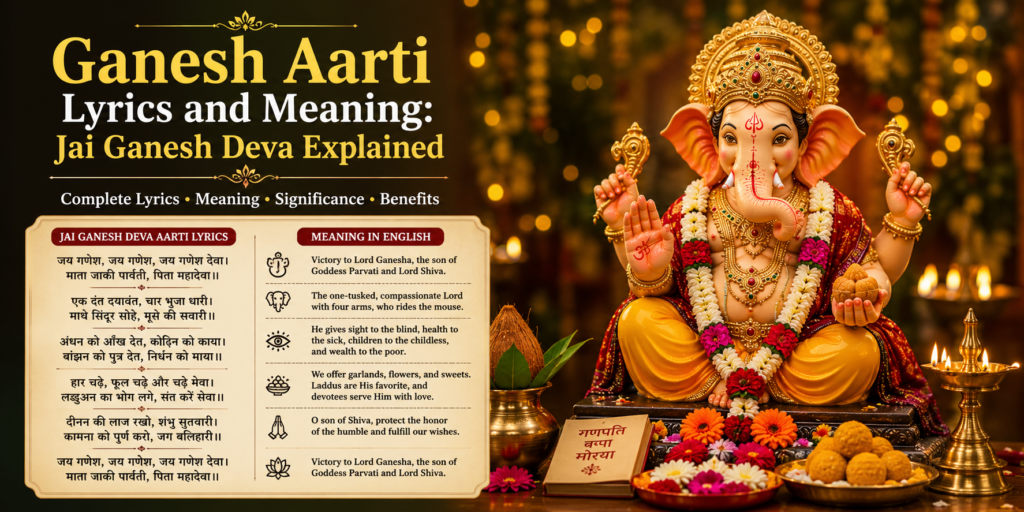
Read the complete Jai Ganesh Deva Aarti lyrics with meaning, significance, and benefits. Learn why this famous Ganesh Aarti is sung by millions of devotees to seek Lord Ganesha's blessings, wisdom, and protection.
ganesh-aarti-lyrics-and-meaning.jpg
Among the many devotional hymns dedicated to Lord Ganesha, none is more beloved than the sacred Jai Ganesh Deva Aarti. Sung in homes, temples, and Ganesh Chaturthi celebrations across India, this Aarti is a heartfelt expression of devotion to the remover of obstacles and the god of wisdom.
But have you ever wondered about the deeper meaning behind the words of this famous Aarti?
In this article, we explore the complete Ganesh Aarti lyrics, their spiritual significance, and the blessings devotees seek while singing them.
Who Is Lord Ganesha?
ganesh-aarti-lyrics-and-meaning.jpg
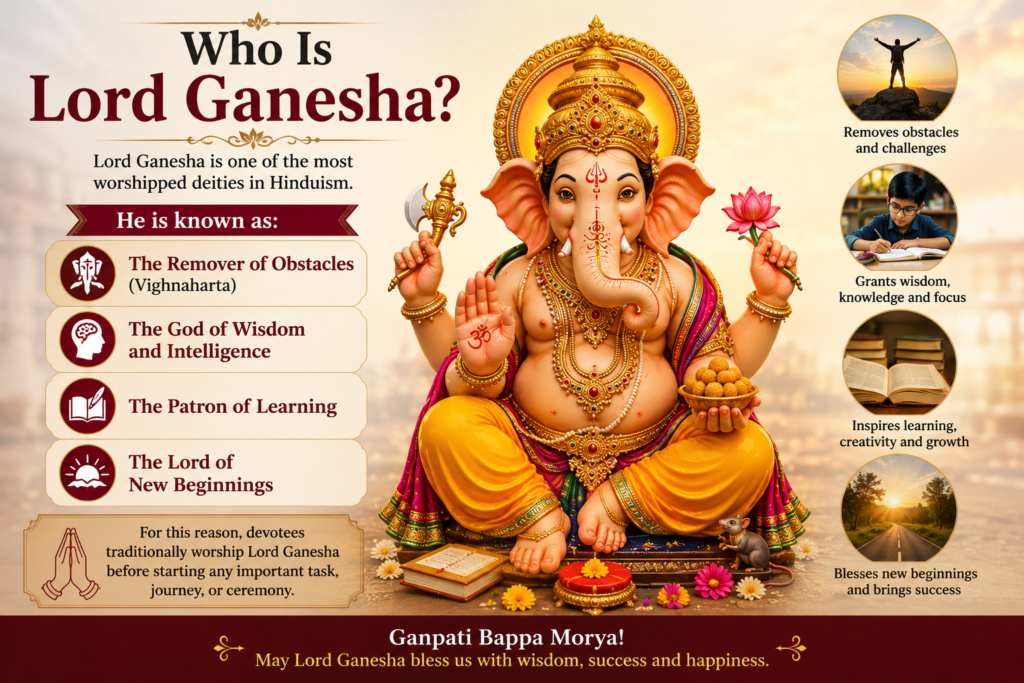
Lord Ganesha is one of the most worshipped deities in Hinduism.
He is known as:
- The Remover of Obstacles (Vighnaharta)
- The God of Wisdom and Intelligence
- The Patron of Learning
- The Lord of New Beginnings
For this reason, devotees traditionally worship Lord Ganesha before starting any important task, journey, or ceremony.
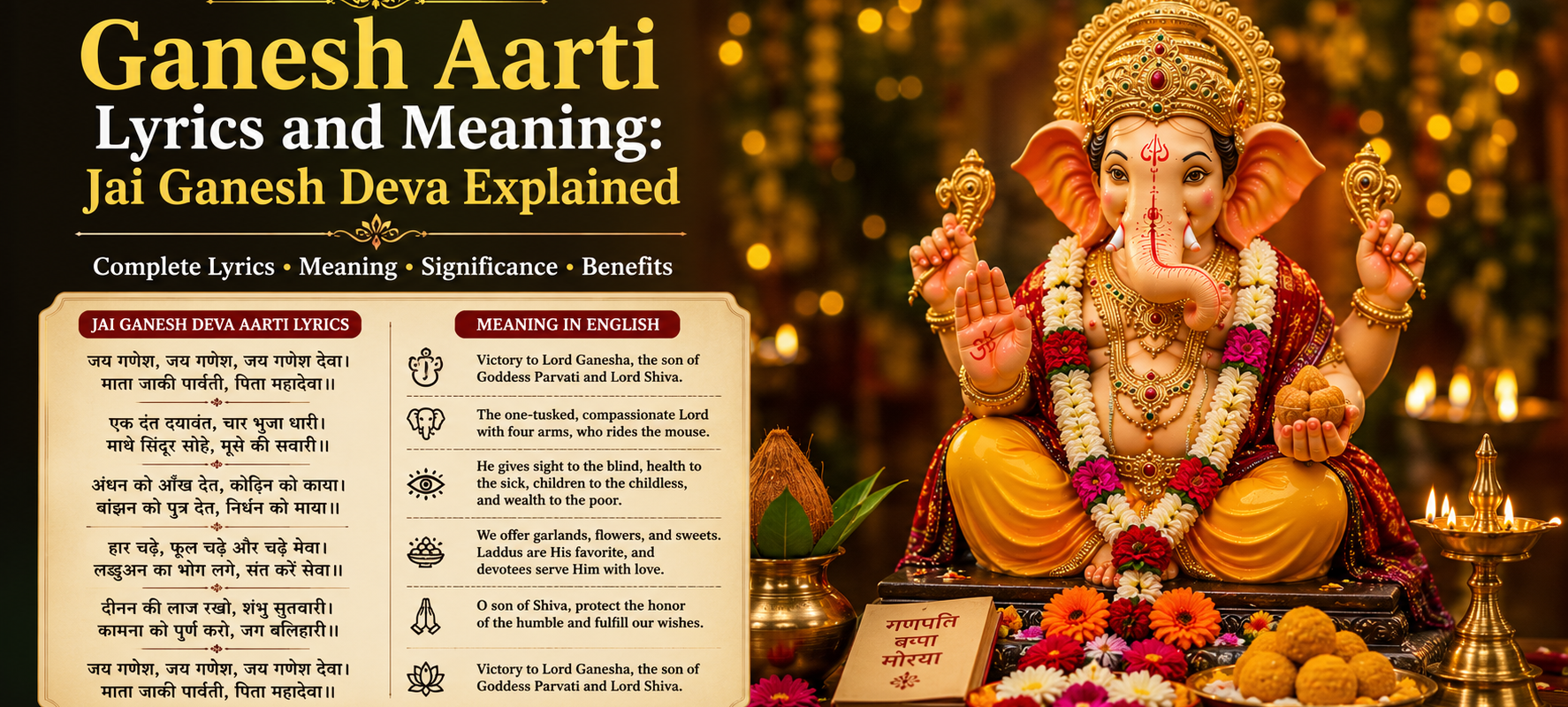
Jai Ganesh Deva Aarti Lyrics
ganesh-aarti-lyrics-and-meaning.jpg
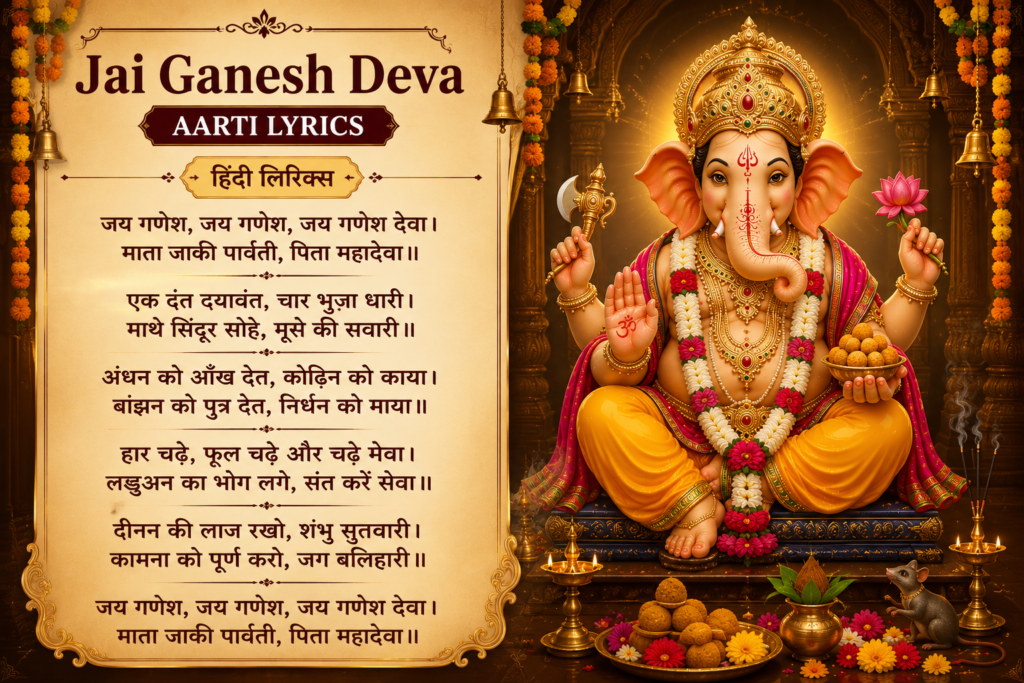
जय गणेश, जय गणेश, जय गणेश देवा।
माता जाकी पार्वती, पिता महादेवा॥
एक दंत दयावंत, चार भुजा धारी।
माथे सिंदूर सोहे, मूसे की सवारी॥
अंधन को आँख देत, कोढ़िन को काया।
बांझन को पुत्र देत, निर्धन को माया॥
हार चढ़े, फूल चढ़े और चढ़े मेवा।
लड्डुअन का भोग लगे, संत करें सेवा॥
दीनन की लाज रखो, शंभु सुतवारी।
कामना को पूर्ण करो, जग बलिहारी॥
जय गणेश, जय गणेश, जय गणेश देवा।
माता जाकी पार्वती, पिता महादेवा॥
Meaning of Jai Ganesh Deva Aarti
The Aarti praises Lord Ganesha as the compassionate son of Goddess Parvati and Lord Shiva.
Each verse highlights His divine qualities:
Mata Jaki Parvati, Pita Mahadeva
This reminds devotees of Lord Ganesha’s divine lineage and sacred origin.
Ek Dant Dayavant
The phrase means:
- Ek Dant = One Tusk
- Dayavant = Compassionate One
It glorifies Lord Ganesha’s kindness and unique appearance.
Moose Ki Sawari
The mouse symbolizes human desires and restless thoughts.
Lord Ganesha riding the mouse teaches mastery over desires and self-control.
Ladduan Ka Bhog Lage
The offering of laddoos symbolizes sweetness, gratitude, and devotion.
It reflects the devotee’s love for the Lord.
Spiritual Significance of Ganesh Aarti
The Ganesh Aarti is much more than a devotional song.
It carries profound spiritual messages.
Wisdom Over Ignorance
Lord Ganesha represents knowledge and clarity.
Singing the Aarti reminds us to seek wisdom before action.
Faith During Difficult Times
The Aarti encourages devotees to trust divine guidance during challenges.
Removal of Inner Obstacles
The greatest obstacles are often:
- Fear
- Ego
- Doubt
- Anger
- Negative thinking
Ganesh Aarti inspires us to overcome these barriers.
Benefits of Chanting Jai Ganesh Deva Aarti
Devotees believe that regular chanting brings both spiritual and mental benefits.
Creates Positive Energy
The sacred vibrations help create a peaceful atmosphere.
Improves Focus and Concentration
Regular prayer helps calm the mind and improve mental clarity.
Strengthens Devotion
The Aarti deepens one’s connection with Lord Ganesha.
Invites Auspicious Beginnings
Many devotees sing the Aarti before starting important tasks.
When Should Ganesh Aarti Be Sung?
The Aarti can be sung:
- During Ganesh Chaturthi celebrations
- After daily Ganesh Puja
- Before examinations
- Before starting a new business
- During housewarming ceremonies
- At the beginning of important life events
Morning and evening are traditionally considered the most auspicious times.
Why Is Lord Ganesha Worshipped First?
According to Hindu tradition, Lord Shiva blessed Ganesha with the honor of being worshipped before all other deities.
This symbolizes the importance of removing obstacles before beginning any endeavor.
The Ganesh Aarti reflects this same principle by invoking His blessings first.
Life Lessons Hidden in Ganesh Aarti
The Aarti contains timeless wisdom for modern life.
Stay Humble
Despite His immense power, Lord Ganesha remains compassionate and approachable.
Seek Wisdom Before Action
Knowledge and understanding should guide every decision.
Be Grateful
The offerings mentioned in the Aarti symbolize gratitude toward the divine.
Serve Others
True spirituality is reflected in kindness and service.
Frequently Asked Questions
What is the most popular Ganesh Aarti?
Jai Ganesh Deva is the most widely sung Ganesh Aarti across India.
What is the meaning of Jai Ganesh Deva?
It means “Victory to Lord Ganesha, the divine remover of obstacles.”
When should Ganesh Aarti be performed?
It is traditionally performed after Ganesh Puja, especially during morning and evening worship.
Can Ganesh Aarti be sung daily?
Yes. Many devotees sing it daily to seek Lord Ganesha’s blessings and guidance.
Conclusion
The sacred Jai Ganesh Deva Aarti is much more than a devotional hymn.
It is a beautiful prayer that celebrates Lord Ganesha’s wisdom, compassion, and power to remove obstacles from our lives.
Whether sung during Ganesh Chaturthi or as part of daily worship, this timeless Aarti continues to inspire millions of devotees with faith, positivity, and devotion.
May Lord Ganesha bless you with wisdom, success, and happiness.
Ganpati Bappa Morya!
If this story moved you, share it.
Explore more in Bhajan & Mantras →