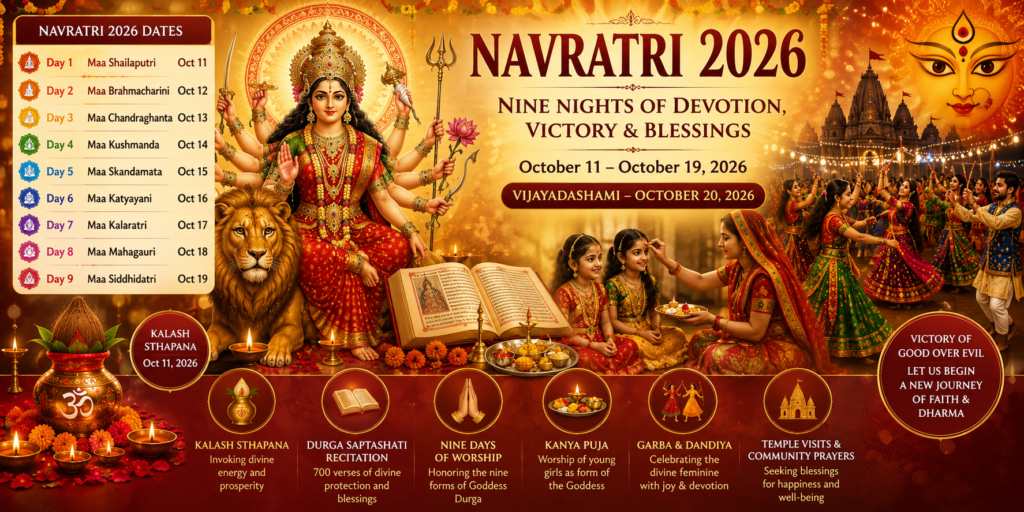
Navratri 2026 will be celebrated from October 11 to October 19, honoring the nine divine forms of Goddess Durga. This complete guide covers Navratri dates, Puja Muhurat, Navratri colors, Kalash Sthapana, Durga Saptashati recitation, Kanya Puja, fasting traditions, regional celebrations, and the spiritual significance of Vijayadashami. Learn how devotees across India celebrate this sacred festival of devotion, strength, and the victory of good over evil.
navratri-2026-dates-puja-muhurat-guide.jpg
Navratri is one of the most widely celebrated Hindu festivals dedicated to Goddess Durga and her divine manifestations. Observed over nine sacred nights, the festival symbolizes the triumph of righteousness over evil and the awakening of divine energy within every individual.
During Navratri, devotees worship the nine forms of Goddess Durga, perform fasting, recite sacred scriptures, visit temples, and participate in vibrant cultural celebrations such as Garba and Dandiya. The festival culminates with Vijayadashami (Dussehra), commemorating the victory of good over evil.
If you are looking for Navratri 2026 dates, Puja Muhurat, significance, rituals, and celebration traditions, this complete guide covers everything you need to know.
Navratri 2026 Dates
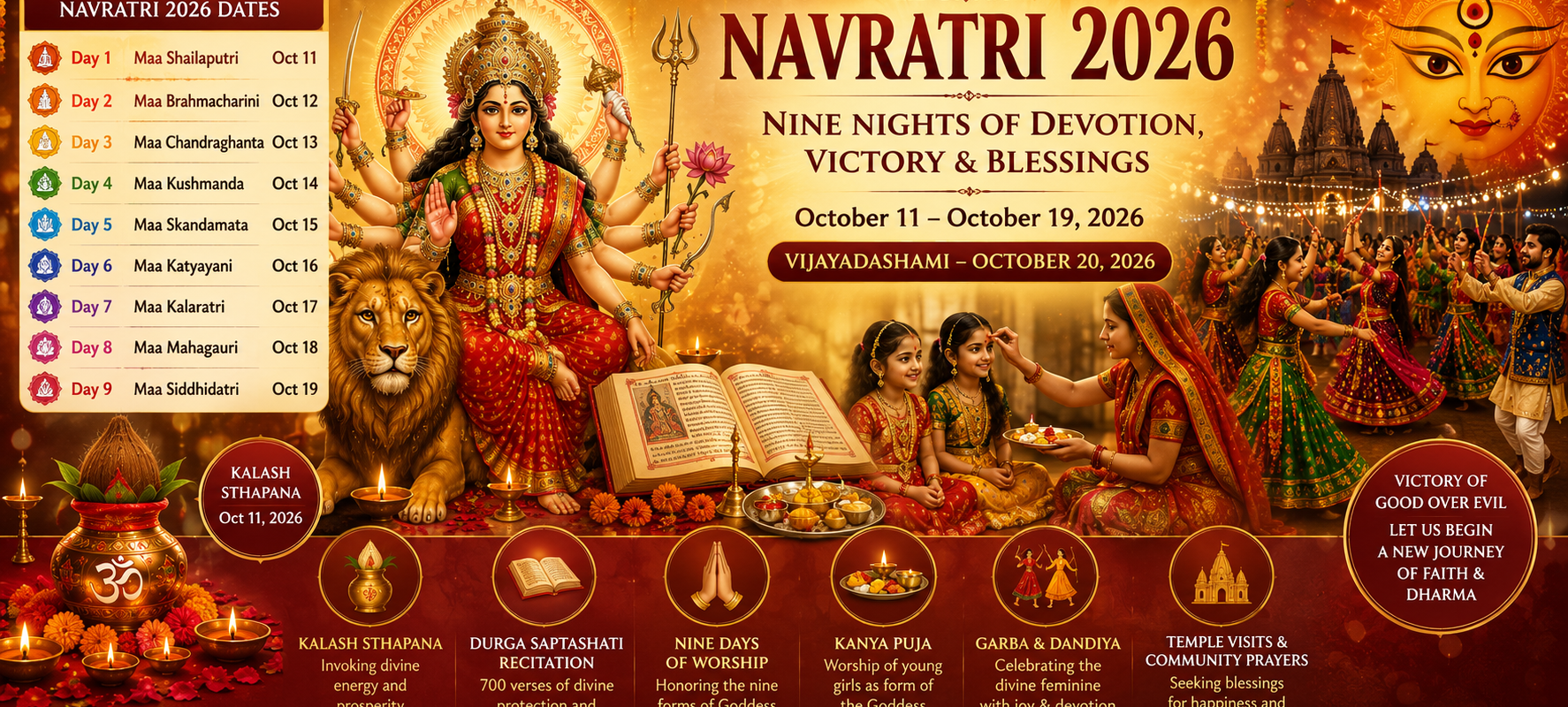
Sharad Navratri 2026 will begin on Sunday, October 11, 2026, and conclude on Monday, October 19, 2026.
The festival is observed during the Hindu lunar month of Ashwin and is considered the most significant of the four Navratris celebrated throughout the year.
Navratri 2026 Calendar
| Event | Date |
|---|---|
| Navratri Begins | October 11, 2026 |
| Day 1 – Shailaputri Puja | October 11, 2026 |
| Day 2 – Brahmacharini Puja | October 12, 2026 |
| Day 3 – Chandraghanta Puja | October 13, 2026 |
| Day 4 – Kushmanda Puja | October 14, 2026 |
| Day 5 – Skandamata Puja | October 15, 2026 |
| Day 6 – Katyayani Puja | October 16, 2026 |
| Day 7 – Kalaratri Puja | October 17, 2026 |
| Day 8 – Mahagauri Puja (Durga Ashtami) | October 18, 2026 |
| Day 9 – Siddhidatri Puja (Maha Navami) | October 19, 2026 |
| Vijayadashami (Dussehra) | October 20, 2026 |
What Does Navratri Mean?
The word Navratri is derived from two Sanskrit words:
- Nav meaning Nine
- Ratri meaning Nights
Together, Navratri means “Nine Nights.”
These nine nights represent a spiritual journey in which devotees worship different forms of the Divine Mother and gradually move from worldly concerns toward inner purification, wisdom, and spiritual awakening.
The festival reminds devotees that divine power, courage, and wisdom reside within every soul.
Why Is Navratri Celebrated?
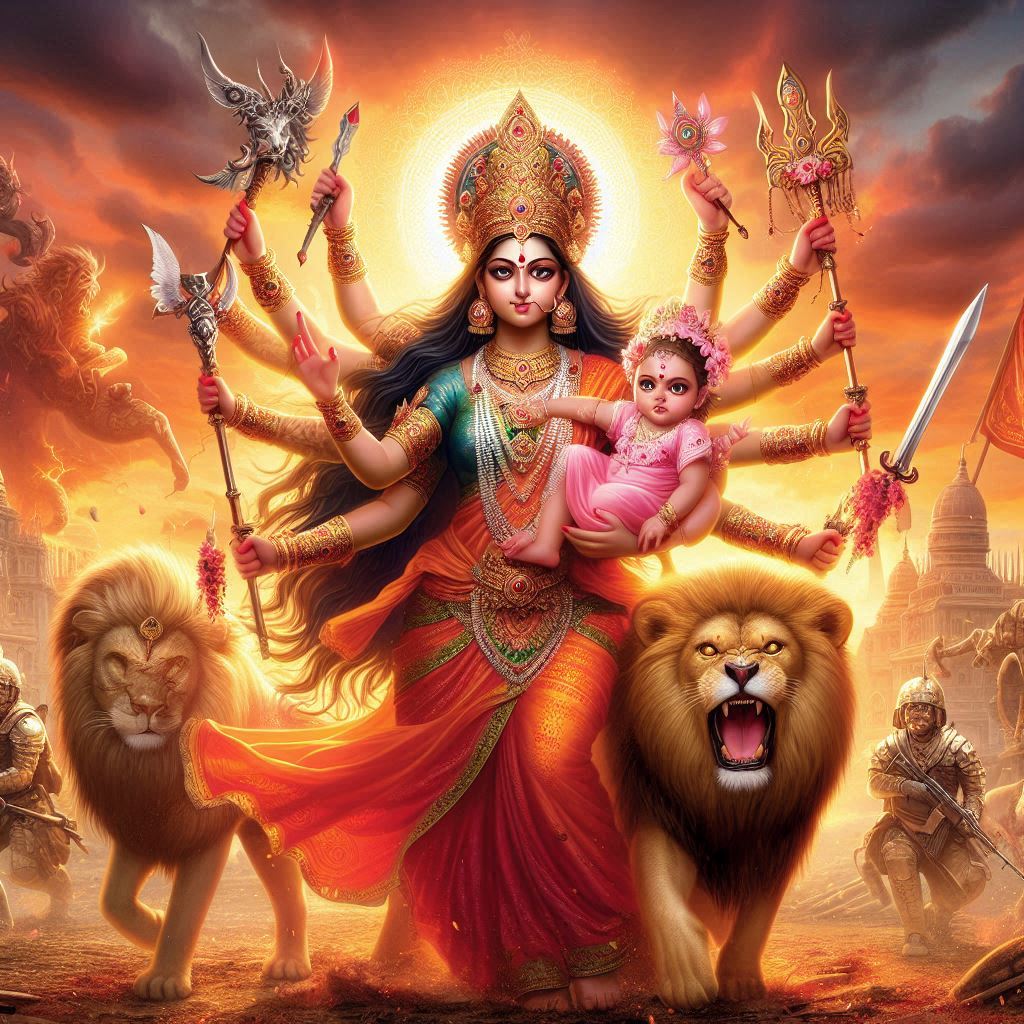
Navratri 2026 celebrates the nine divine forms of Goddess Durga through fasting, prayer, Navdurga worship, Garba, Dandiya, and Vijayadashami celebrations.
The most popular legend associated with Navratri is the battle between Goddess Durga and the buffalo demon Mahishasura.
According to Hindu scriptures, Mahishasura received a powerful boon that made him nearly invincible. Empowered by this blessing, he created chaos across the heavens and earth, troubling gods, sages, and devotees.
To restore cosmic balance, the divine energies of Lord Brahma, Lord Vishnu, and Lord Shiva united to manifest Goddess Durga.
Mounted on a lion and armed with celestial weapons, Goddess Durga fought Mahishasura for nine days and nights. On the tenth day, she defeated the demon, restoring peace and righteousness.
This victory symbolizes:
- Good triumphing over evil
- Truth overcoming falsehood
- Divine wisdom defeating ignorance
- Inner strength conquering fear
For this reason, Navratri is celebrated as a festival of faith, courage, and spiritual victory.
Importance of Ghatasthapana (Kalash Sthapana)
navratri-2026-dates-puja-muhurat-guide.jpg
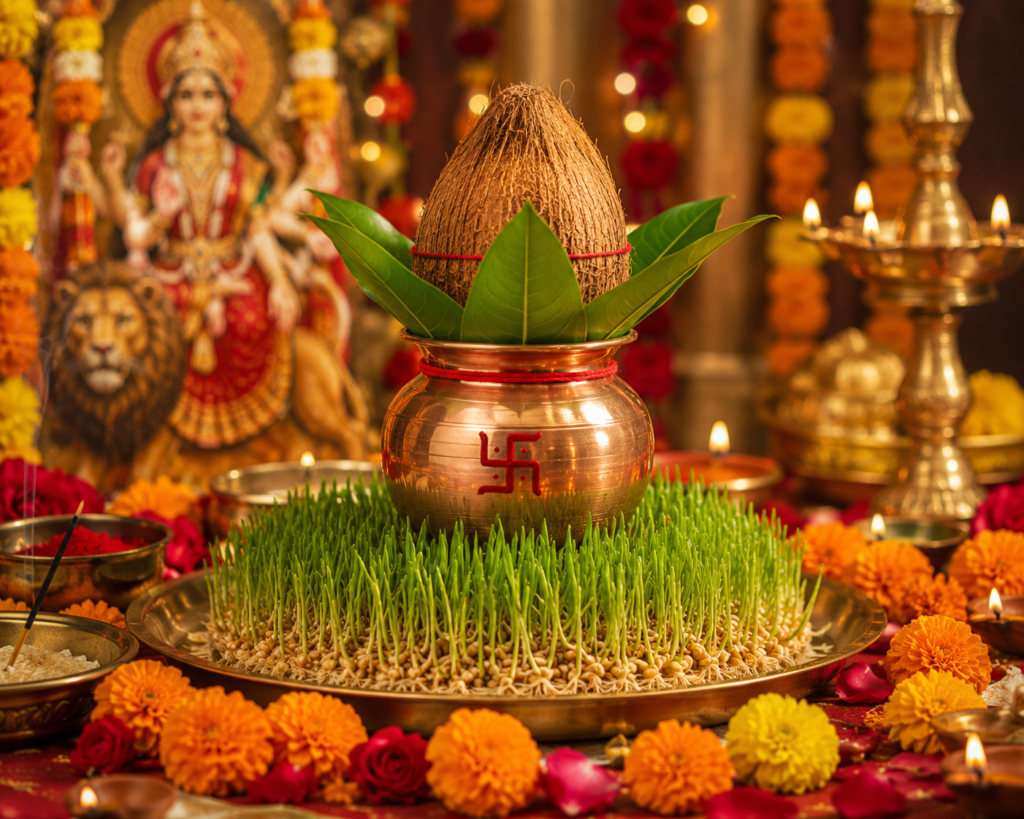
Navratri traditionally begins with Ghatasthapana, also known as Kalash Sthapana.
This sacred ritual marks the formal invocation of Goddess Durga into the home or temple.
A Kalash filled with holy water is placed on a bed of barley seeds and topped with mango leaves and a coconut.
Spiritual Meaning of Kalash Sthapana
The Kalash symbolizes:
- Creation and abundance
- Divine energy
- Prosperity and fertility
- Presence of the Goddess
Many devotees maintain an अखंड ज्योति (continuous sacred lamp) throughout Navratri as a symbol of divine protection and spiritual illumination.
The Nine-Day Worship Tradition of Navratri
navratri-2026-dates-puja-muhurat-guide.jpg
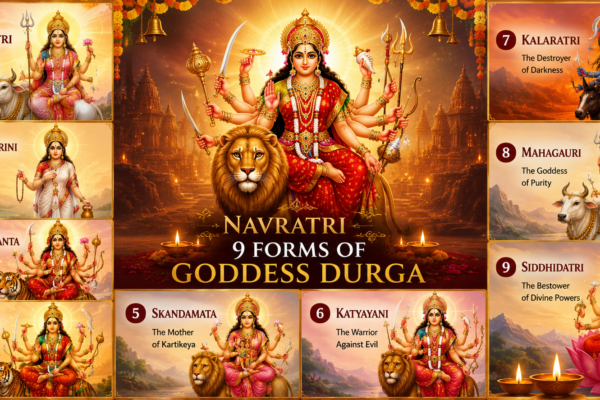
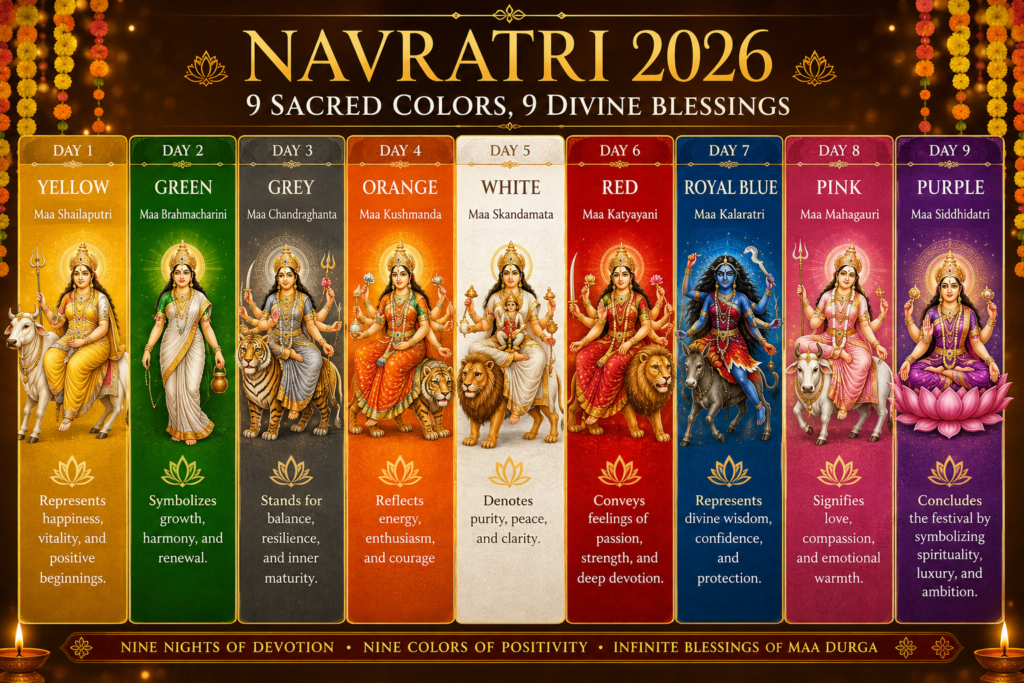
Each day of Navratri is dedicated to a different form of Goddess Durga. Along with worshipping the Navdurga, devotees also wear specific colors that reflect the spiritual energy of each day. These sacred Navratri colors add joy, devotion, and symbolic meaning to the celebrations.
Navratri 2026 Colors and Their Significance
| Day | Goddess | Color | Spiritual Significance |
|---|---|---|---|
| Day 1 | Maa Shailaputri | Yellow | Happiness, vitality, and positive beginnings |
| Day 2 | Maa Brahmacharini | Green | Growth, harmony, and renewal |
| Day 3 | Maa Chandraghanta | Grey | Balance, resilience, and inner maturity |
| Day 4 | Maa Kushmanda | Orange | Energy, enthusiasm, and courage |
| Day 5 | Maa Skandamata | White | Purity, peace, and clarity |
| Day 6 | Maa Katyayani | Red | Passion, strength, and deep devotion |
| Day 7 | Maa Kalaratri | Royal Blue | Divine wisdom, confidence, and protection |
| Day 8 | Maa Mahagauri | Pink | Love, compassion, and emotional warmth |
| Day 9 | Maa Siddhidatri | Purple | Spirituality, ambition, and divine grace |
Day 1 – Maa Shailaputri (Yellow)
Represents strength, stability, and new beginnings. The color yellow symbolizes optimism, happiness, and fresh energy.
Day 2 – Maa Brahmacharini (Green)
Symbolizes devotion, discipline, and spiritual knowledge. Green reflects growth, harmony, and renewal.
Day 3 – Maa Chandraghanta (Grey)
Represents courage and protection. Grey signifies balance, resilience, and emotional maturity.
Day 4 – Maa Kushmanda (Orange)
The source of cosmic energy and creation. Orange reflects enthusiasm, vitality, and courage.
Day 5 – Maa Skandamata (White)
Embodies motherhood, compassion, and nurturing energy. White symbolizes purity, peace, and clarity of mind.
Day 6 – Maa Katyayani (Red)
The warrior goddess who destroys negativity. Red represents strength, determination, devotion, and divine power.
Day 7 – Maa Kalaratri (Royal Blue)
Removes fear, darkness, and obstacles. Royal blue signifies wisdom, confidence, and divine protection.
Day 8 – Maa Mahagauri (Pink)
Represents purity, peace, and forgiveness. Pink symbolizes love, compassion, kindness, and emotional warmth.
Day 9 – Maa Siddhidatri (Purple)
Bestows wisdom, spiritual accomplishment, and divine grace. Purple represents spirituality, ambition, and higher consciousness.
Devotees often wear these auspicious colors, chant daily mantras, and offer prayers corresponding to each form of the Goddess.
Durga Saptashati: The Heart of Navratri Worship
One of the most important spiritual practices during Navratri is the recitation of the Durga Saptashati, also known as the Devi Mahatmyam.
This sacred text contains 700 verses describing:
- The glory of Goddess Durga
- Her battles against demonic forces
- The triumph of divine energy
Many devotees read the entire scripture over nine days, while others recite selected chapters daily.
The recitation is believed to:
- Remove negativity
- Increase confidence
- Provide spiritual protection
- Bring peace and prosperity
How Navratri Is Celebrated Across India
navratri-2026-dates-puja-muhurat-guide.jpg
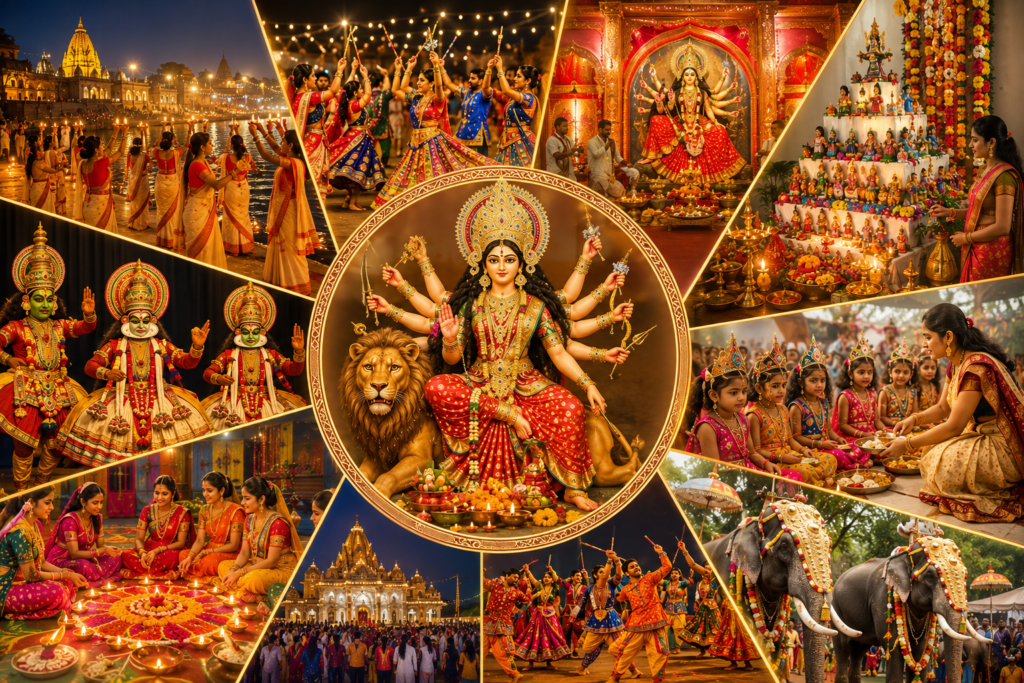
Navratri is celebrated in unique ways throughout India.
Gujarat
The state is famous for vibrant Garba and Dandiya Raas celebrations, where thousands gather in traditional attire to dance in devotion to the Goddess.
West Bengal
Navratri coincides with grand Durga Puja celebrations featuring magnificent idols, artistic pandals, cultural programs, and community gatherings.
Uttar Pradesh
Devotees observe fasting, visit temples, and participate in Ramleela performances depicting the life of Lord Rama.
Maharashtra
Families perform Ghatasthapana, organize community prayers, and celebrate the festival with devotion and cultural events.
South India
Many households display the traditional Golu arrangement, showcasing dolls and figurines representing divine stories and cultural heritage.
Despite regional differences, the essence of Navratri remains the same—devotion to the Divine Mother.
Significance of Kanya Puja During Navratri
navratri-2026-dates-puja-muhurat-guide.jpg
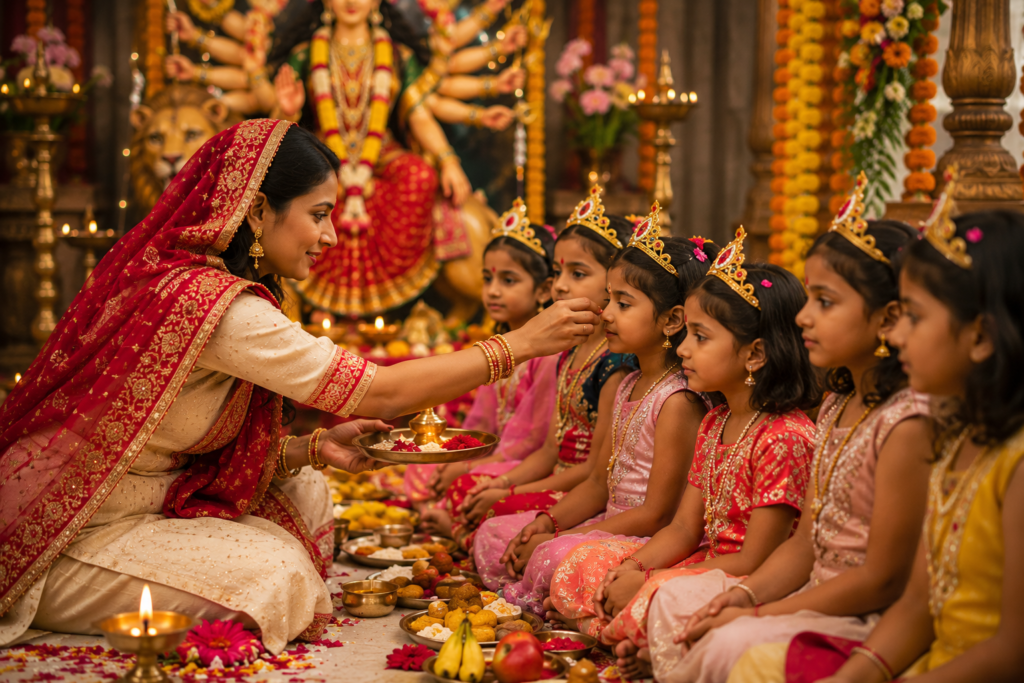
One of the most cherished rituals of Navratri is Kanya Puja, usually performed on Durga Ashtami or Maha Navami.
Young girls are worshipped as living manifestations of Goddess Durga.
Devotees welcome them into their homes and offer:
- Halwa
- Puri
- Chana
- Fruits
- Gifts
- New clothes
Why Is Kanya Puja Important?
The ritual symbolizes:
- Respect for feminine energy
- Reverence for innocence and purity
- Recognition of the Divine Mother in all beings
Kanya Puja reminds devotees that the Goddess resides within every individual.
Navratri Fasting Traditions
navratri-2026-dates-puja-muhurat-guide.jpg
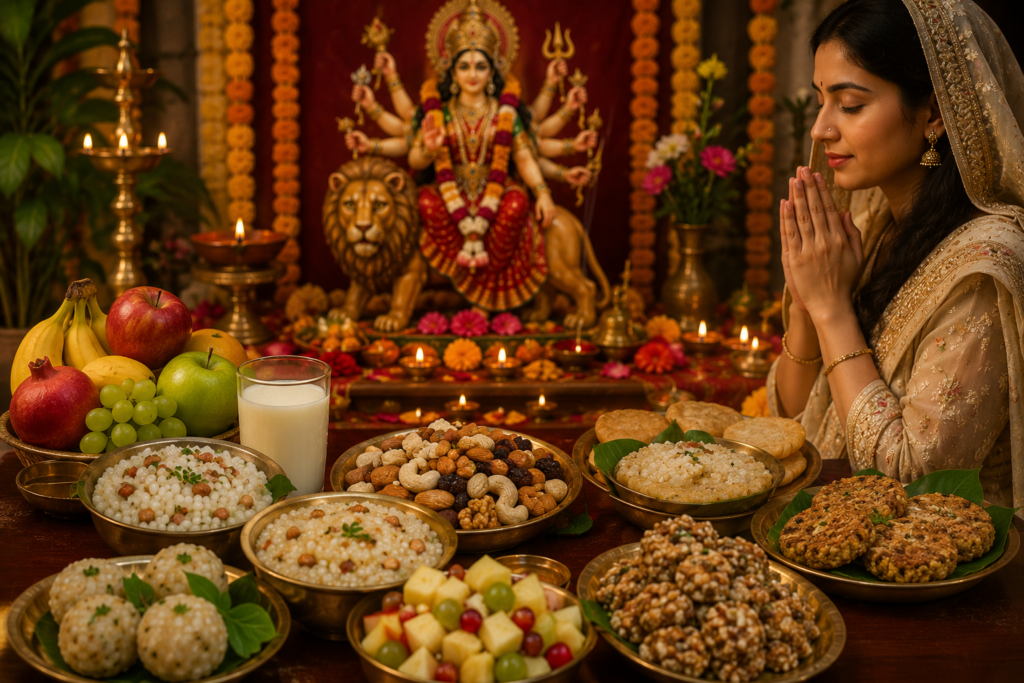
Many devotees observe Navratri fasts to purify the body and mind.
Common fasting foods include:
- Fruits
- Milk
- Dry fruits
- Sabudana
- Singhara flour dishes
- Kuttu flour preparations
Fasting is viewed not merely as avoiding food but as a practice of self-discipline, devotion, and spiritual focus.
Vijayadashami: The Grand Conclusion of Navratri
navratri-2026-dates-puja-muhurat-guide.jpg
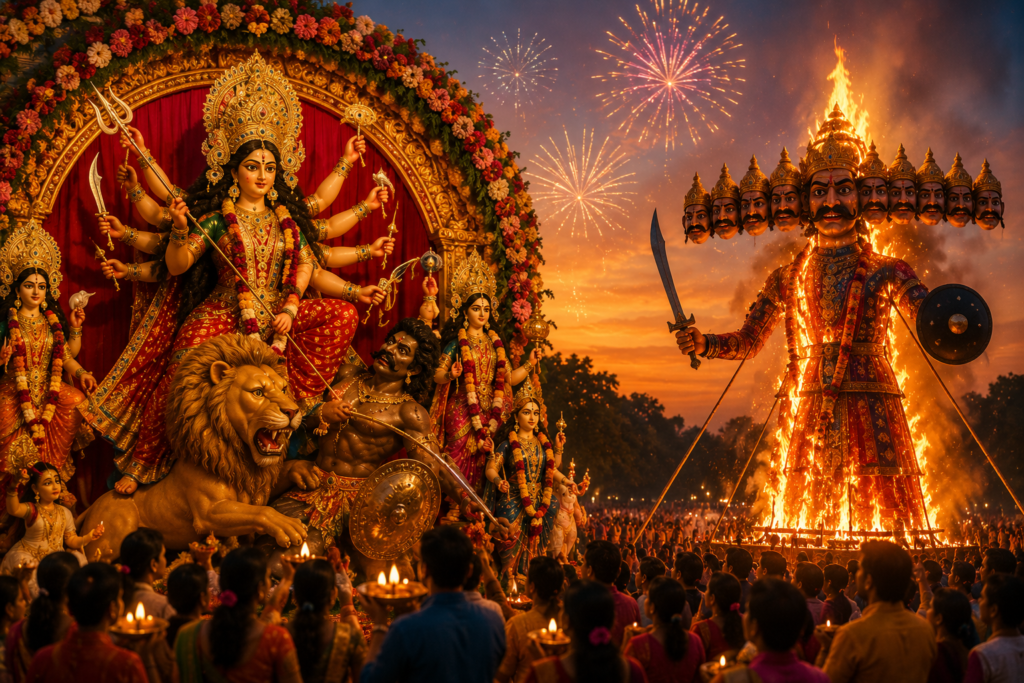
The tenth day following Navratri is celebrated as Vijayadashami, also known as Dussehra.
The word Vijayadashami means “The Tenth Day of Victory.”
The day commemorates:
- Goddess Durga’s victory over Mahishasura
- Lord Rama’s victory over Ravana
Across India, people celebrate by:
- Visiting temples
- Performing Shami Puja
- Burning Ravana effigies
- Beginning new ventures and studies
- Seeking blessings for future success
The festival carries a timeless message: righteousness always prevails.
Spiritual Lessons of Navratri
Navratri is much more than a religious festival.
It teaches us:
- To overcome negativity
- To develop courage and self-confidence
- To cultivate discipline and devotion
- To respect divine feminine energy
- To pursue spiritual growth
The nine nights symbolize the inner battle against ignorance, fear, anger, greed, and ego.
Frequently Asked Questions
When is Navratri 2026?
Navratri 2026 begins on October 11, 2026, and concludes on October 19, 2026.
What are the Navratri 2026 colors?
The nine Navratri colors for 2026 are Yellow, Green, Grey, Orange, White, Red, Royal Blue, Pink, and Purple. Each color corresponds to a specific day and symbolizes unique spiritual qualities associated with the worship of Goddess Durga.
What is the significance of Navratri?
Navratri celebrates the victory of Goddess Durga over Mahishasura and symbolizes the triumph of good over evil.
Why is Kalash Sthapana performed?
Kalash Sthapana marks the invocation of Goddess Durga and the beginning of Navratri worship.
What is Durga Saptashati?
Durga Saptashati is a sacred Hindu scripture containing 700 verses praising Goddess Durga and describing her divine victories.
When is Kanya Puja performed?
Kanya Puja is usually observed on Durga Ashtami or Maha Navami during Navratri.
Conclusion
Navratri 2026 is a beautiful opportunity to connect with the divine energy of Goddess Durga through prayer, fasting, mantra chanting, and spiritual reflection. From the sacred ritual of Ghatasthapana to the celebration of Vijayadashami, every aspect of the festival carries deep spiritual meaning.
The tradition of wearing the nine auspicious Navratri colors further enriches the celebration, reminding devotees of the unique virtues represented by each form of the Divine Mother.
As devotees worship the Navdurga over nine sacred nights, they are reminded that true strength, wisdom, courage, compassion, and spiritual growth come from the blessings of Maa Durga.
May Maa Durga bless you and your family with happiness, prosperity, protection, and spiritual growth throughout Navratri 2026.
Jai Mata Di!
If this story moved you, share it.
Explore more in Festival →