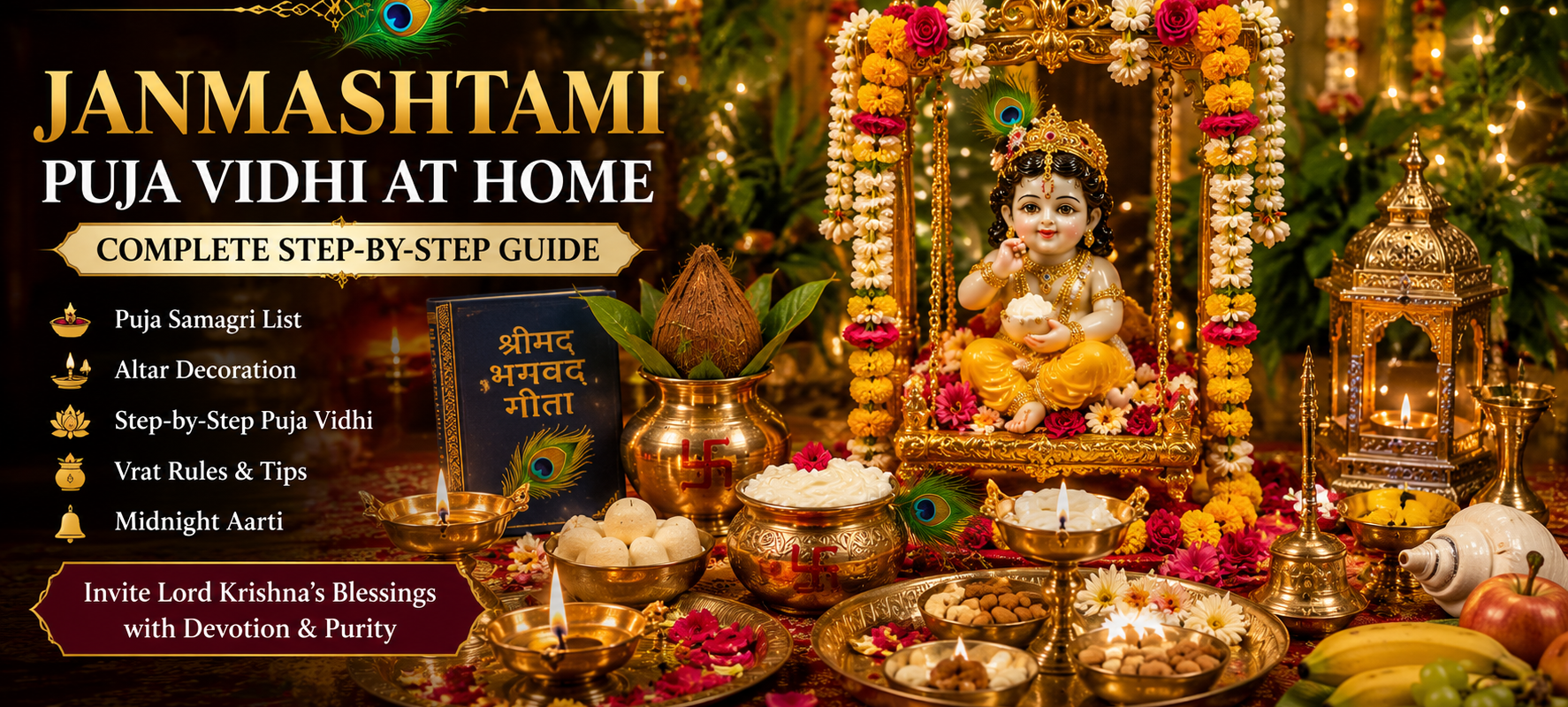
Janmashtami is a sacred festival celebrating the birth of Lord Krishna. This complete Janmashtami Puja Vidhi guide explains the essential Puja Samagri, step-by-step worship process, Panchamrit preparation, fasting rules, Bhog offerings, and midnight Aarti rituals to help devotees celebrate the festival with devotion and spiritual significance.
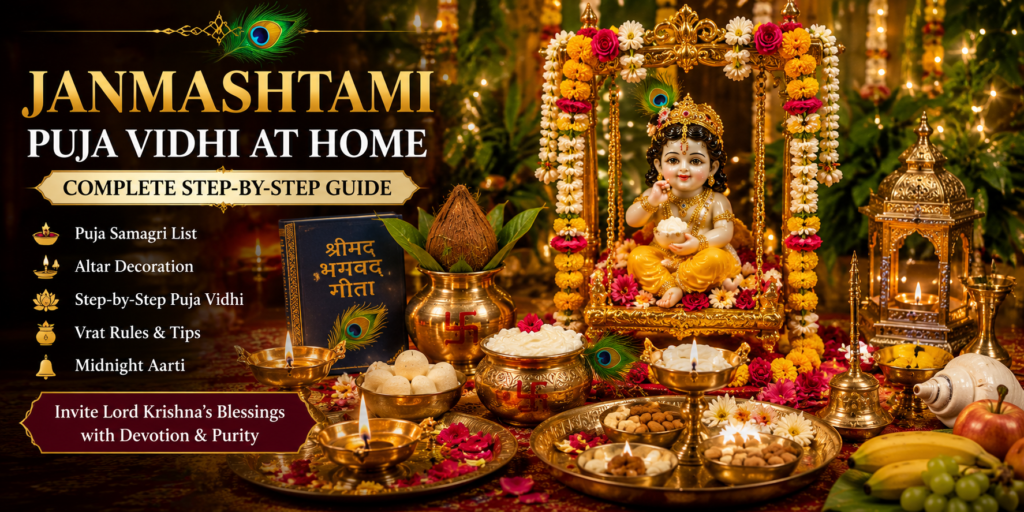
Krishna Janmashtami is one of the most sacred festivals in Hinduism, celebrating the divine birth of Lord Krishna, the eighth incarnation of Lord Vishnu. On this auspicious day, devotees observe fasting, decorate their homes, sing bhajans, and perform special prayers at midnight—the sacred time believed to be Lord Krishna’s birth hour.
If you are planning to celebrate Janmashtami at home, this complete guide will help you perform the puja with devotion and simplicity.
Why Is Janmashtami Puja Performed?
Janmashtami is not merely a festival; it is a celebration of faith, devotion, and Dharma.
Devotees perform Krishna Janmashtami Puja to:
- Seek Lord Krishna’s blessings
- Invite happiness and prosperity into their homes
- Strengthen spiritual growth and devotion
- Express gratitude for Krishna’s teachings in the Bhagavad Gita
- Celebrate the victory of Dharma over Adharma
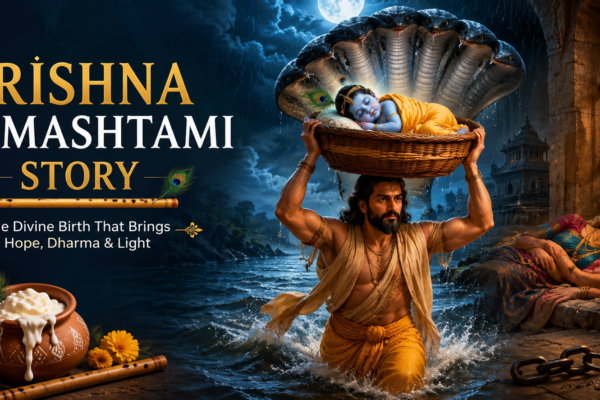
Before performing the puja, many devotees also read the story of Lord Krishna’s birth to understand the deeper significance of the festival.
Janmashtami Puja Samagri List
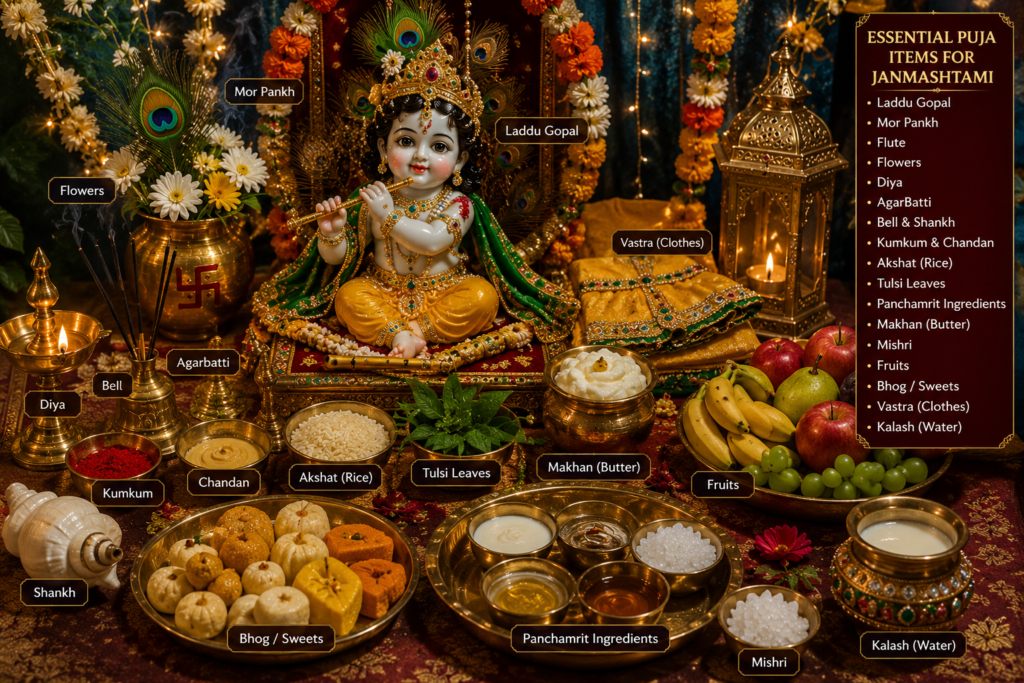
Prepare the following items before starting the puja:
Essential Puja Items
- Idol or image of Bal Gopal / Laddu Gopal
- Decorated cradle (Palna)
- Clean red or yellow cloth
- Flowers and flower garlands
- Tulsi leaves
- Incense sticks (Agarbatti)
- Ghee lamp (Diya)
- Kumkum and Chandan
- Akshat (rice)
- Panchamrit ingredients
- Fruits
- Mishri and Makhan (butter)
- Sweets and Bhog items
- Conch shell (Shankh)
- Bell (Ghanti)
Preparing the Puja Area
Clean the Worship Space
Begin by thoroughly cleaning the puja room or altar area.
Cleanliness represents purity and helps create a peaceful environment for worship.
Decorate the Altar
Decorate the space using:
- Flowers
- Mango leaves
- Rangoli
- Fairy lights
- Peacock feathers
Many devotees create a miniature Vrindavan or Gokul-themed decoration around Laddu Gopal.
Step-by-Step Janmashtami Puja Vidhi at Home
Step 1: Establish Lord Krishna’s Presence
Place the idol or image of Bal Gopal on a clean altar.
Spread a fresh cloth beneath the deity and decorate the surroundings with flowers.
Step 2: Place Laddu Gopal in the Palna
A beautifully decorated swing symbolizes baby Krishna’s arrival.
Gently place Laddu Gopal in the cradle and adorn Him with fresh clothes and ornaments.
Step 3: Light the Diya and Incense
Light a ghee lamp and incense sticks.
Offer prayers seeking Lord Krishna’s blessings and guidance.
Step 4: Perform Abhishek
Many devotees perform a ceremonial bath for Laddu Gopal using:
- Milk
- Curd
- Honey
- Ghee
- Sugar
After Abhishek, gently clean and dress the deity.
Step 5: Prepare Panchamrit
Mix:
- Milk
- Curd
- Honey
- Ghee
- Sugar
This sacred mixture is later distributed as Prasad.
Step 6: Offer Bhog
Offer Krishna’s favorite foods such as:
- Makhan (butter)
- Mishri
- Fruits
- Peda
- Panjiri
- Dry fruits
Some devotees prepare the famous Chappan Bhog consisting of 56 food offerings.
Step 7: Chant Krishna Mantras
Recite:
“Om Namo Bhagavate Vasudevaya”
or
“Hare Krishna Hare Krishna,
Krishna Krishna Hare Hare,
Hare Rama Hare Rama,
Rama Rama Hare Hare”
You may also read selected verses from the Bhagavad Gita.
Step 8: Midnight Celebration
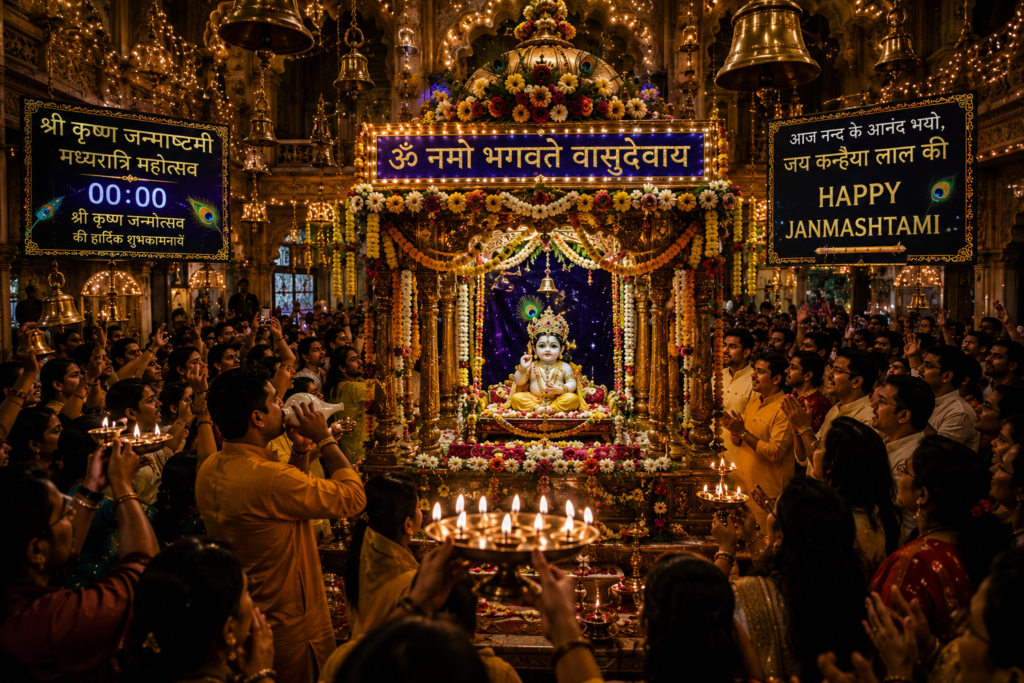
The most important part of Janmashtami occurs at midnight.
At the believed birth time of Lord Krishna:
- Ring bells
- Blow the conch shell
- Sing Krishna bhajans
- Rock the cradle gently
- Perform the midnight Aarti
This moment symbolizes the divine birth of hope, wisdom, and Dharma.
Step 9: Distribute Prasad
After the Aarti, distribute Panchamrit and Bhog among family members and devotees.
Janmashtami Vrat Rules
Many devotees observe a fast throughout the day.
Common practices include:
- Avoiding grains
- Consuming fruits and milk
- Drinking plenty of water
- Maintaining a devotional mindset
- Avoiding anger and negative thoughts
Different regions and traditions may follow slightly different fasting practices.
Common Mistakes to Avoid During Janmashtami Puja
Performing Rituals Without Devotion
The sincerity of worship matters more than elaborate arrangements.
Forgetting Tulsi Leaves
Tulsi is considered extremely dear to Lord Krishna and is commonly included in offerings.
Ignoring Spiritual Reflection
Janmashtami is not only about rituals. Spend time reflecting on Krishna’s teachings and values.
Spiritual Meaning of Janmashtami Worship
The birth of Lord Krishna symbolizes the awakening of divine consciousness within us.
The prison where Krishna was born represents fear and ignorance.
The opening prison doors symbolize liberation.
The crossing of the Yamuna represents overcoming life’s obstacles through faith.
Every ritual performed on Janmashtami reminds devotees that light can emerge even during the darkest moments.
Frequently Asked Questions
What time should Janmashtami Puja be performed?
The main puja is traditionally performed around midnight, the believed birth time of Lord Krishna.
Can Janmashtami Puja be performed without a priest?
Yes. Devotees can perform Janmashtami Puja at home with sincerity and devotion.
What is Krishna’s favorite Bhog?
Makhan (butter), Mishri, Panchamrit, fruits, and milk-based sweets are among the most popular offerings.
When should the Janmashtami fast be broken?
Traditionally, devotees break the fast after midnight worship or the next morning after completing Parana rituals.
Conclusion
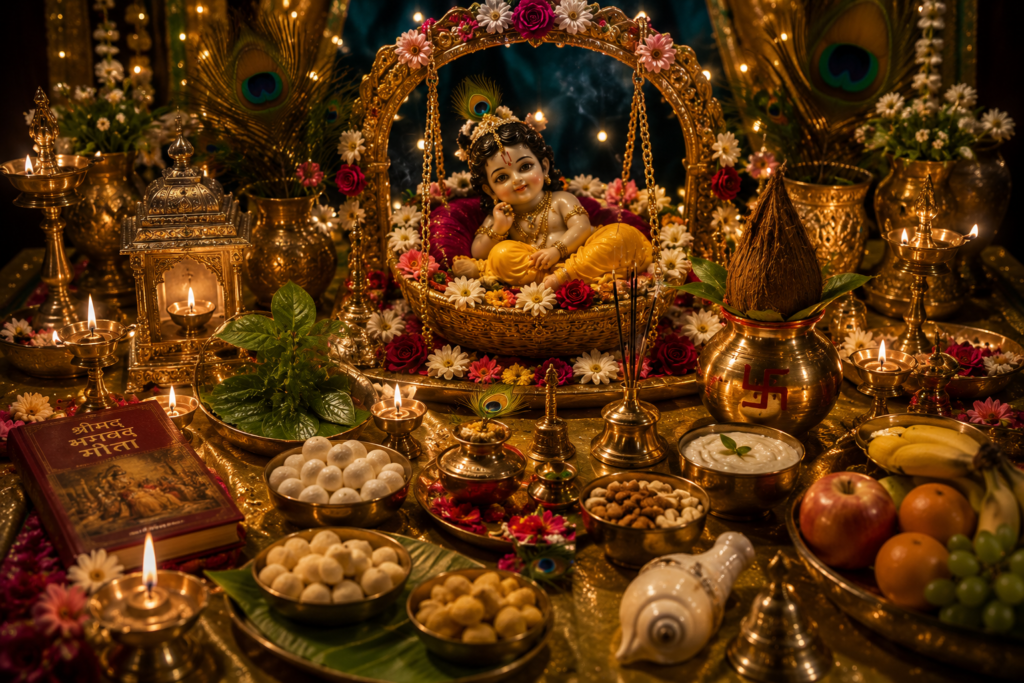
Janmashtami is a beautiful opportunity to connect with Lord Krishna through devotion, prayer, and self-reflection.
Whether your celebration is simple or elaborate, the true essence of Janmashtami lies in welcoming Krishna’s wisdom, compassion, and joy into your life.
May Lord Krishna bless your home with peace, prosperity, and spiritual growth.
Jai Shri Krishna!
If this story moved you, share it.
Explore more in Festival →