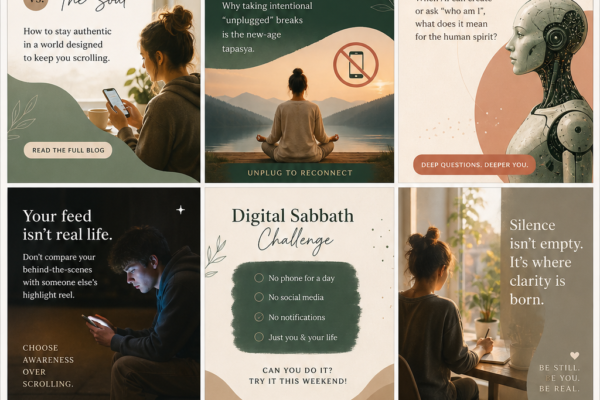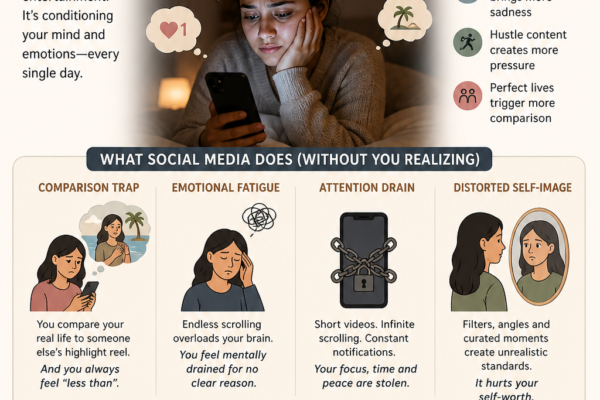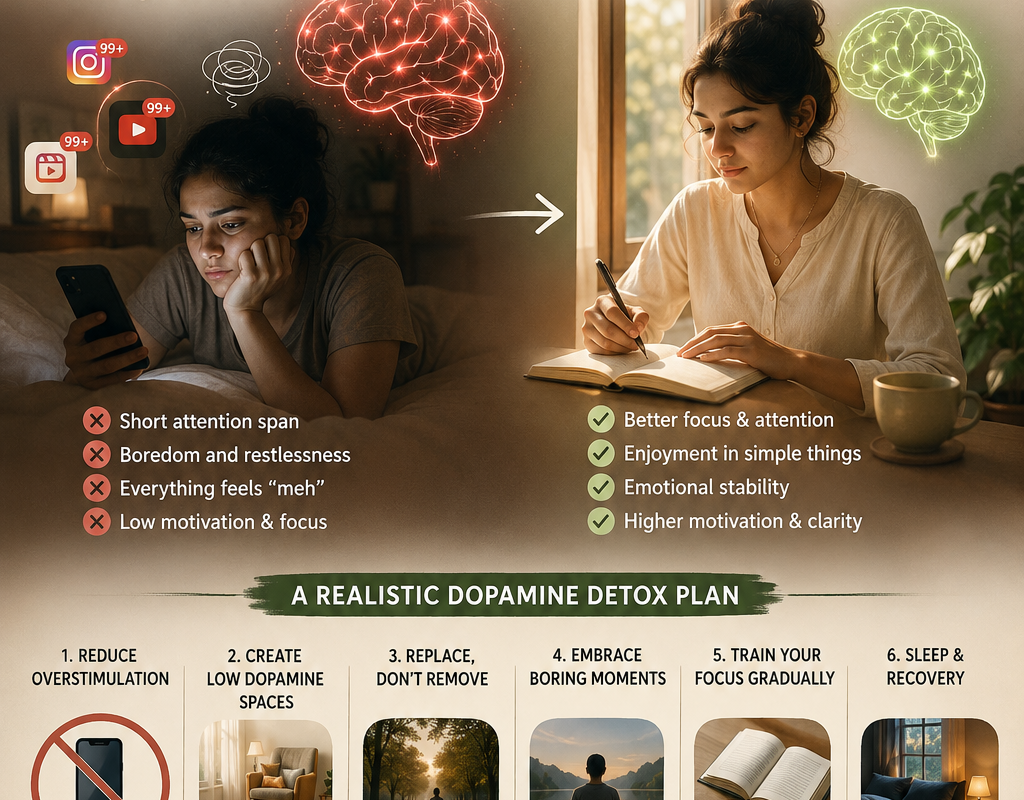
Dopamine detox isn’t about quitting everything or living in isolation—it’s about reducing the constant stimulation your brain has become dependent on. From endless scrolling to short-form content, your mind is trained to seek quick rewards, making simple activities like reading, focusing, or even relaxing feel difficult. This blog explains how dopamine really works, why your attention span is shrinking, and how overstimulation is quietly draining your mental energy. With practical, realistic steps—like limiting short-form content, creating low-stimulation spaces, and rebuilding focus slowly—you can reset your brain without extreme changes. In the end, it’s not about doing less—it’s about feeling more with less.
Why Your Brain Feels Overstimulated—and How to Reset It
🌿 Introduction: When Everything Feels… Meh

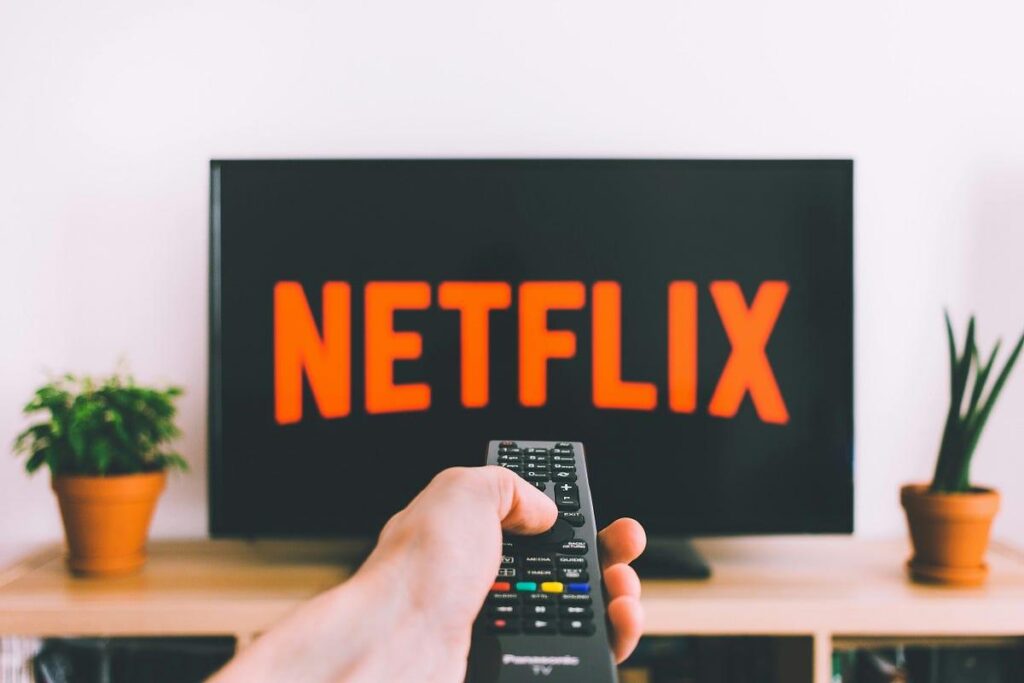
You open Netflix.
Scroll for 10 minutes.
Nothing feels interesting.
You pick up your phone instead.
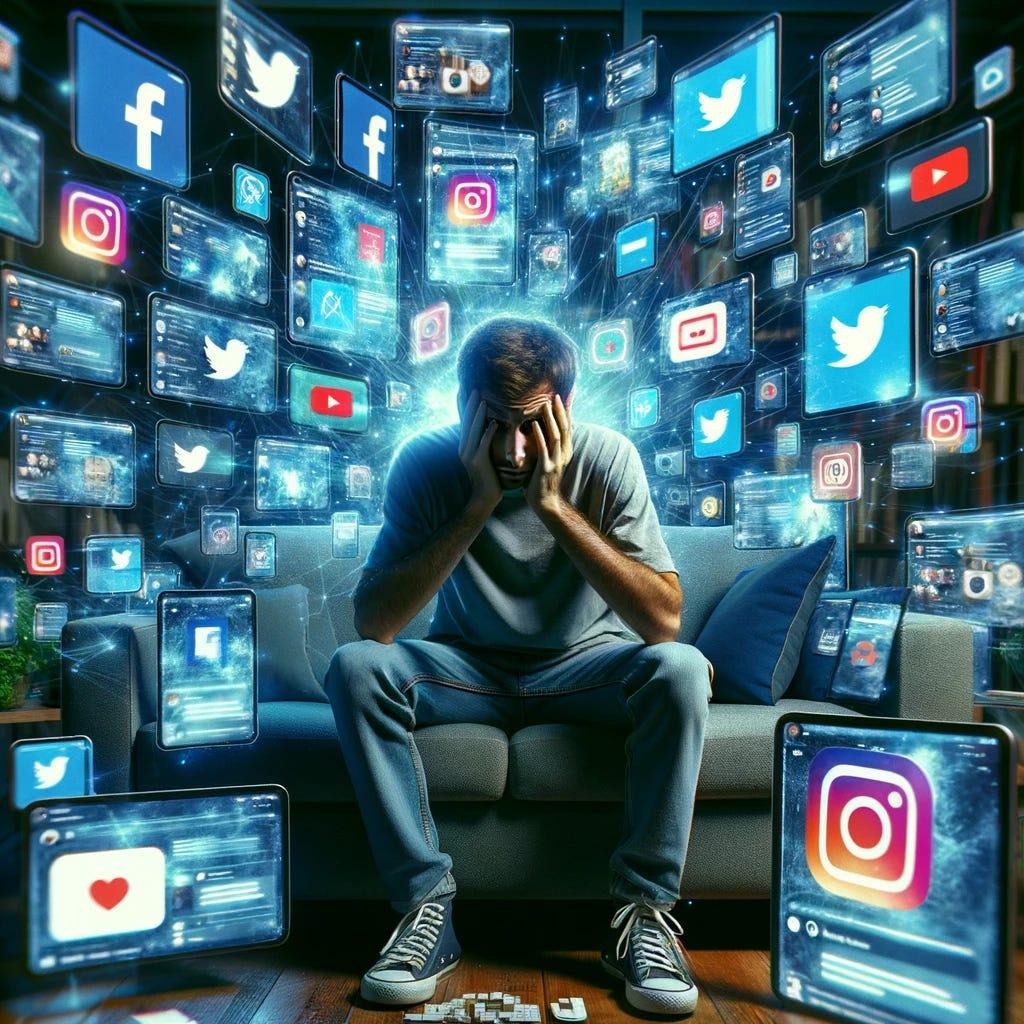
Reels. Shorts. Quick dopamine hits.
Now suddenly, your brain is engaged again.
But here’s the strange part:
The more you consume, the harder it becomes to enjoy simple things.
Reading feels slow.
Silence feels uncomfortable.
Even rest feels… boring.
That’s not your personality changing.
That’s your brain adapting to constant stimulation.
🧠 What Dopamine Actually Is (In Simple Terms)
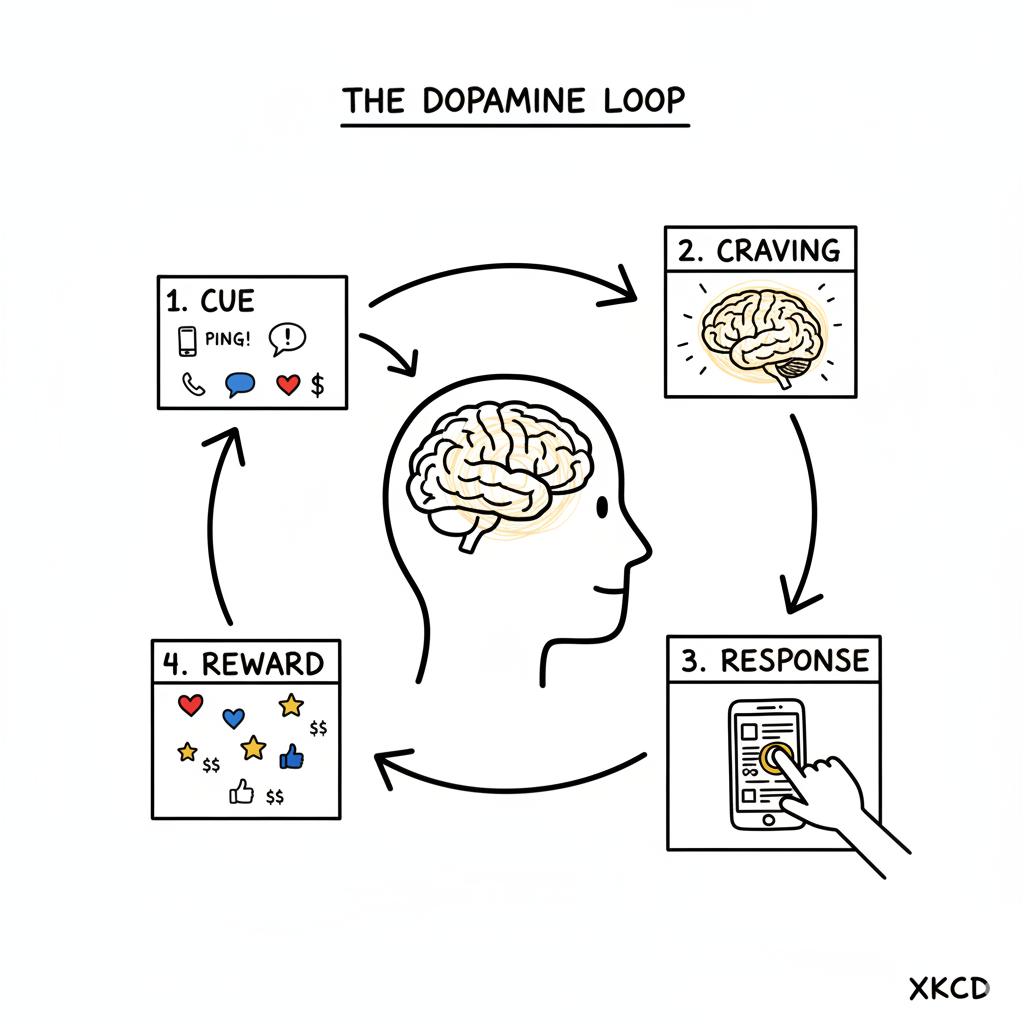
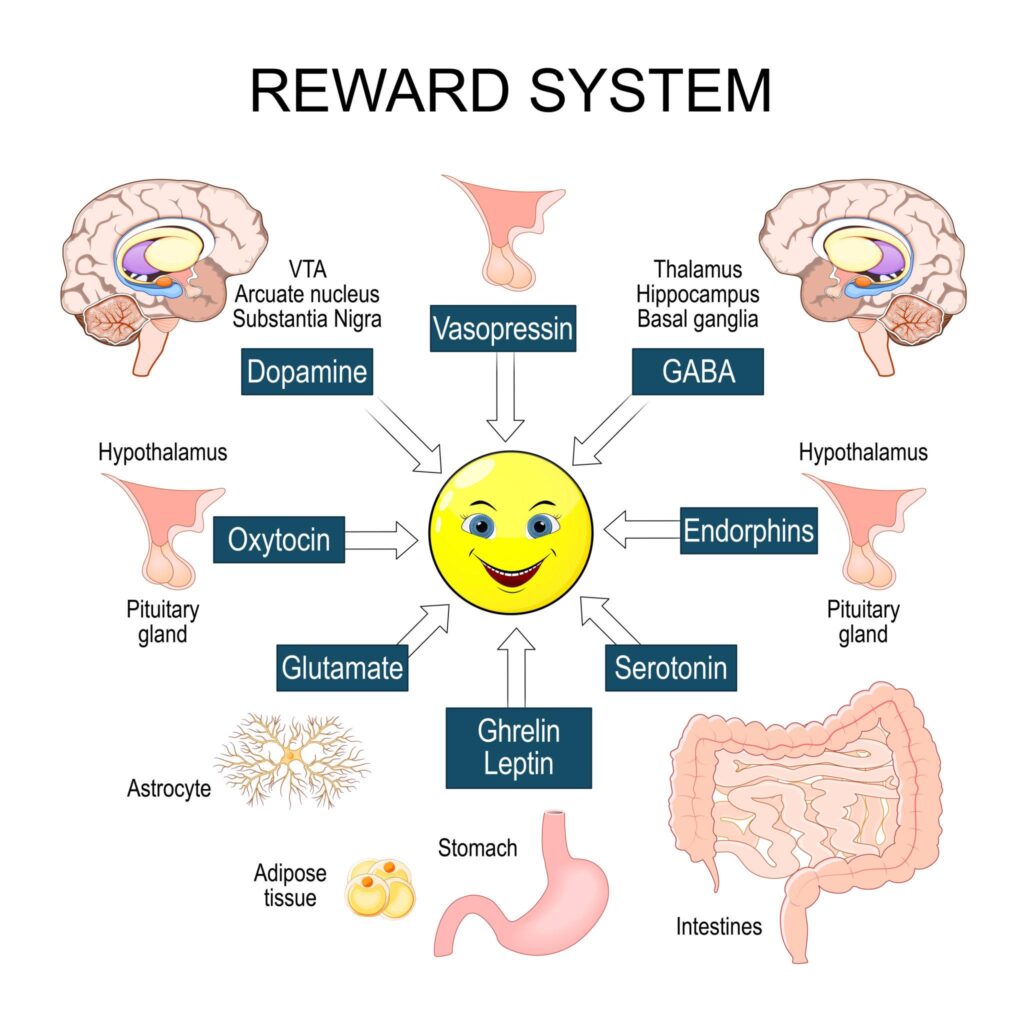
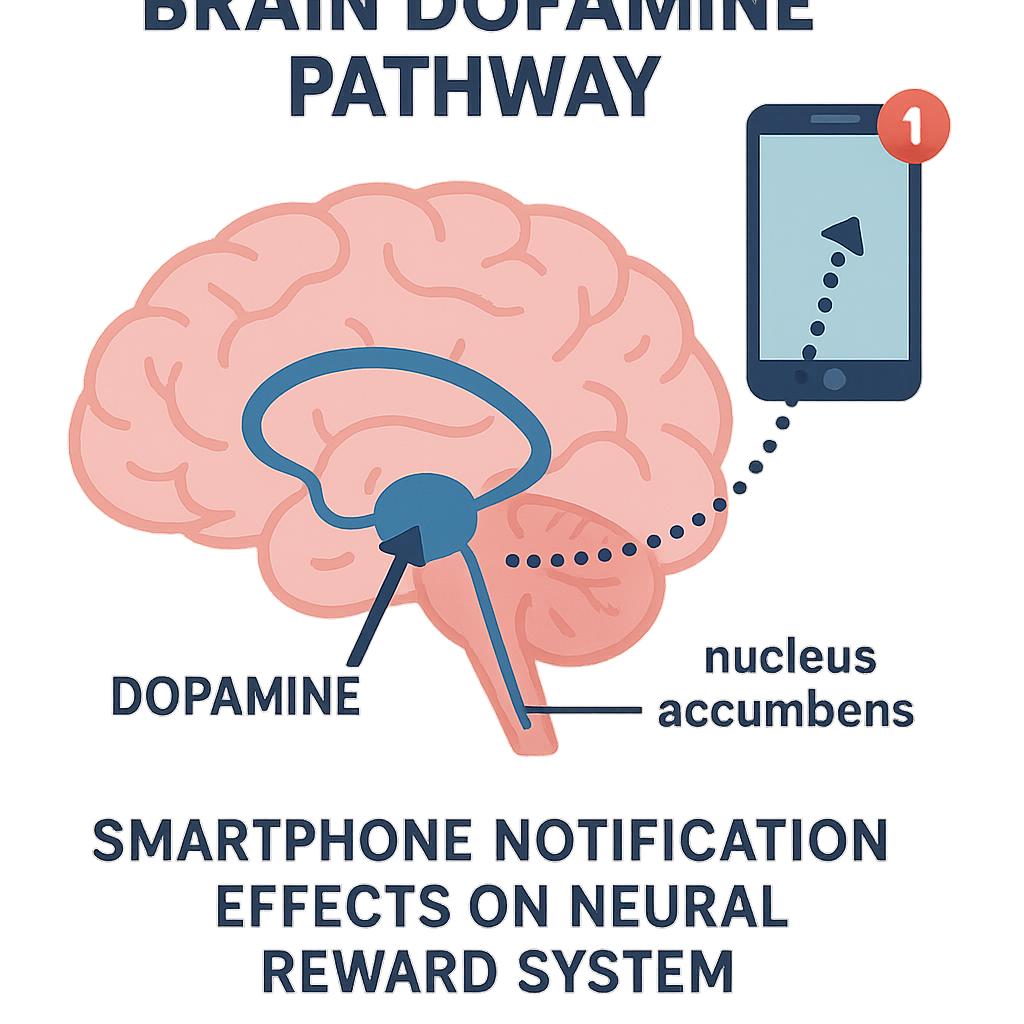
Dopamine is often called the “feel-good chemical,”
but that’s only half the truth.
It’s actually the “want more” chemical.
It drives:
- Cravings
- Motivation
- The urge to repeat behaviors
Every time you:
- Refresh your feed
- Get a notification
- Watch a new video
Your brain gets a tiny dopamine hit.
💭 Simple Analogy
Think of dopamine like fuel for desire.
The more frequently you give your brain quick rewards,
the more it starts expecting them.
And when it doesn’t get them?
Everything else feels dull.
⚠️ Why Everything Feels Boring Now

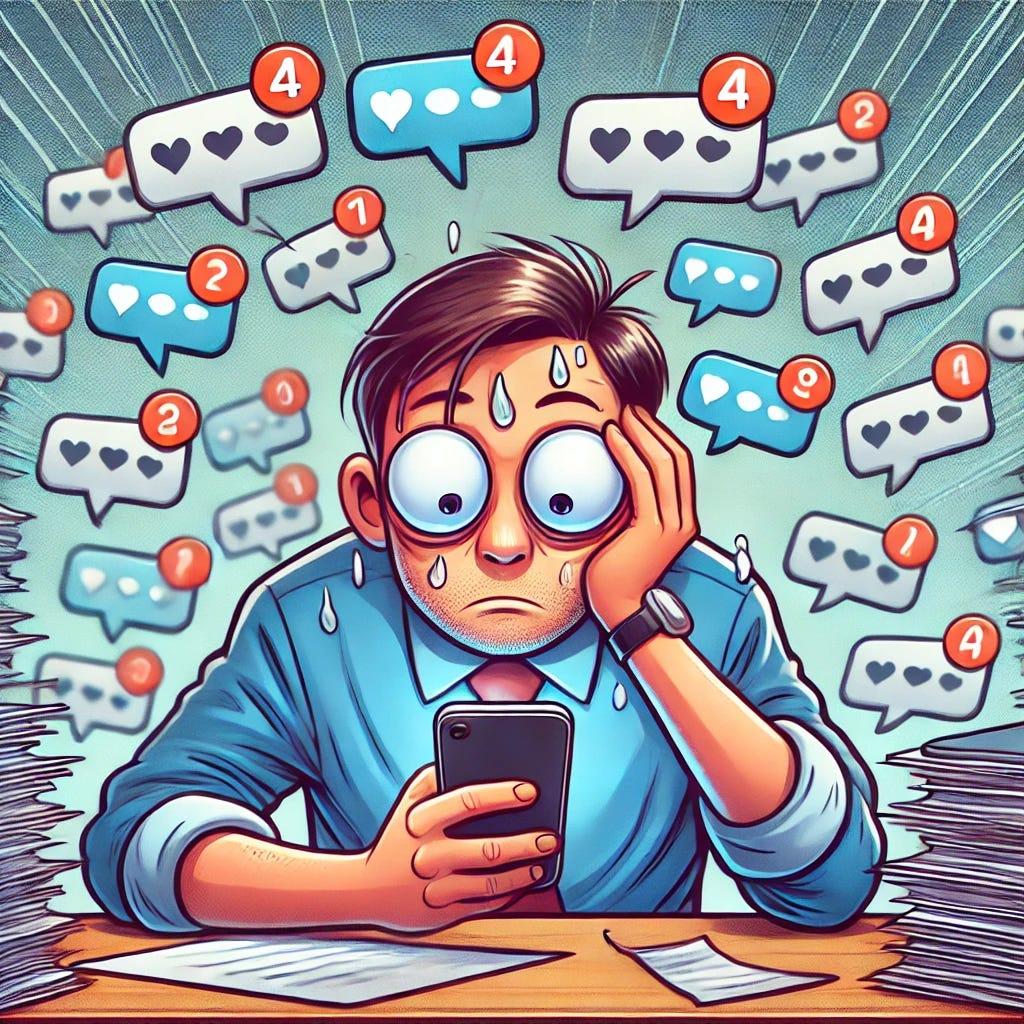
This is where most people get confused.
They think:
“I’ve lost interest in things.”
But actually:
👉 Your brain has been trained to prefer fast, intense stimulation.
💭 Real-Life Example 1: The Netflix Effect
You sit down to watch a movie.
Within 10 minutes:
- You check your phone
- Skip scenes
- Lose interest
Why?
Because your brain is used to:
👉 10-second dopamine hits (Reels/Shorts)
A 2-hour movie now feels like “too much effort.”
💭 Real-Life Example 2: The Focus Problem
You try to:
- Study 📚
- Work 💻
- Read a book 📖
But your mind keeps wandering.
Not because you’re lazy.
But because:
👉 Your brain is craving stimulation every few seconds.
💭 Real-Life Example 3: Even Relaxation Feels Hard
You sit in silence.
Within minutes:
- You feel restless
- You reach for your phone
- You “need” something to do
That discomfort?
👉 That’s withdrawal from constant dopamine.
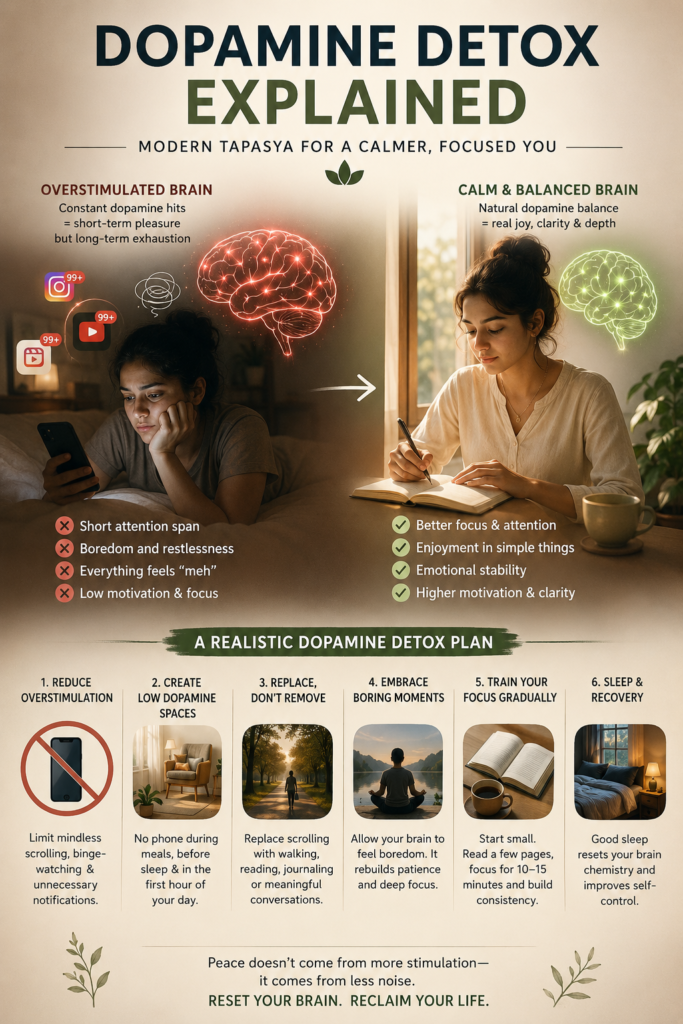
🔥 Modern Tapasya: What Dopamine Detox Really Means



Let’s clear a myth:
Dopamine detox is NOT:
- Quitting everything
- Sitting in a dark room
- Punishing yourself
That’s unrealistic—and unnecessary.
🌿 Real Meaning (Modern Tapasya)
It’s about:
👉 Reducing unnecessary stimulation
👉 Relearning how to enjoy simple things
In dharmic terms, this is close to Tapasya—
not suffering, but intentional discipline for clarity.
🛠️ A Realistic Dopamine Detox Plan (That Actually Works)



No extremes. Just practical shifts.
✔️ 1. Start Your Day Without Dopamine Overload
Instead of:
📱 Checking your phone immediately
Try:
- Sitting quietly for 5 minutes
- Drinking water mindfully
- Stepping outside
👉 This sets your brain’s baseline calm.
✔️ 2. Create “Low Dopamine” Spaces
Give your brain moments of nothingness:
- No phone during meals
- No scrolling before sleep
- Silence during short breaks
At first, it will feel uncomfortable.
That’s normal.
✔️ 3. Replace, Don’t Remove
Don’t just stop scrolling—replace it:
Instead of reels → go for a walk 🚶♀️
Instead of endless videos → journal 📝
Instead of noise → sit quietly 🌿
✔️ 4. Limit Short-Form Content (The Biggest Trigger)
Let’s be honest:
Reels & Shorts = dopamine overload machines
You don’t need to quit.
But:
👉 Reduce consumption intentionally
Even 30–40% reduction makes a huge difference.
✔️ 5. Train Your Focus Again (Slowly)
Start small:
- Read 2 pages
- Focus for 10 minutes
- Sit without distraction
Your brain will resist at first.
But over time:
👉 Your attention span rebuilds.
🌼 Closing Thought
Right now, your brain isn’t broken.
It’s just… overstimulated.
And the solution isn’t more content.
It’s more conscious pauses.
Because in the end:
Peace doesn’t come from more stimulation—
it comes from less noise.
If this story moved you, share it.
Explore more in Digital Age Spirituality →