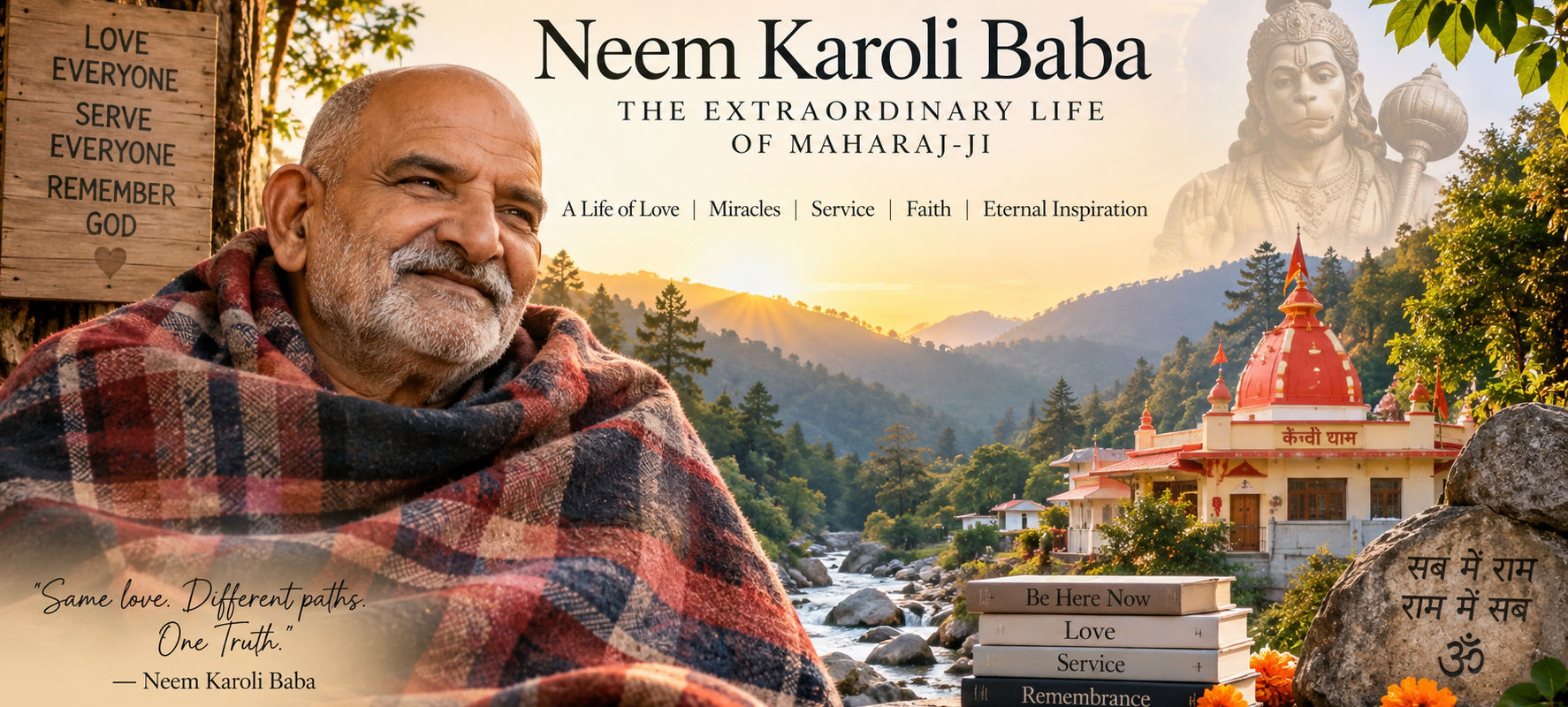
Discover the remarkable life of Neem Karoli Baba, lovingly known as Maharaj Ji—from his childhood, marriage to Ram Beti and family life to his years as a wandering sadhu, legendary miracles, devotion to Lord Hanuman, Kainchi Dham, and his transformative relationship with Ram Dass. Explore the timeless teachings of love, selfless service and remembrance of God that continue to inspire millions
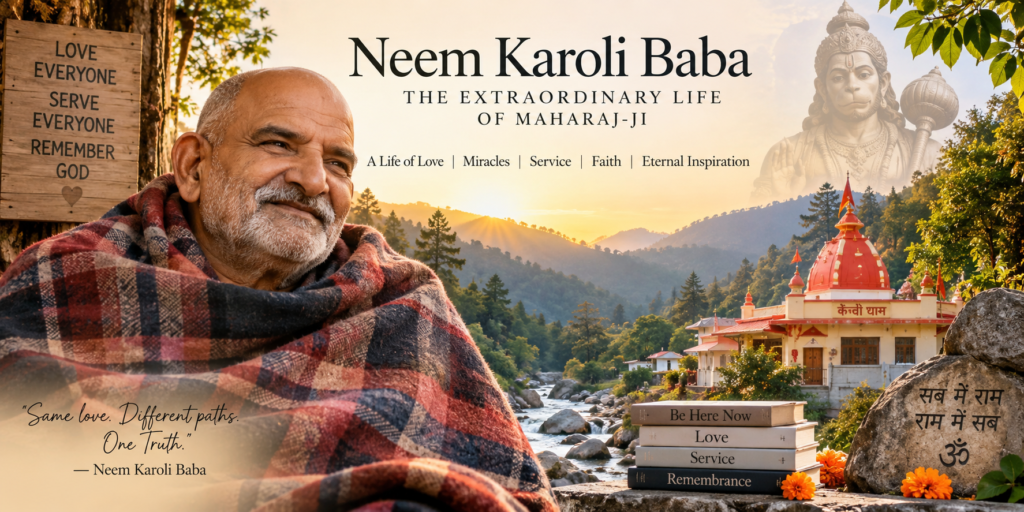
neem-karoli-baba-maharaj-ji.jpg

Neem Karoli Baba, lovingly known as Maharaj-ji, is one of those rare spiritual figures whose life seems to exist somewhere between history and legend.
There are photographs of him. There are devotees who personally met him. There are books filled with their memories. There are places associated with his life, above all Kainchi Dham in Uttarakhand. There are also stories of miracles—of trains that would not move, food that seemed to multiply, unexpected knowledge, healings and mysterious appearances.
And yet, when we try to write a conventional biography of Neem Karoli Baba, something unusual happens.
The neat timeline begins to disappear.
His exact birth date is uncertain. Different accounts describe his early years differently. He was known by different names during different stages of his life. He rarely spoke about his own past and did not seem interested in creating a carefully preserved public biography.
As Ram Dass’s tradition makes clear, there were relatively few established facts and many stories surrounding Maharaj-ji.
Perhaps that is fitting.
Because Neem Karoli Baba did not seem interested in becoming famous.
He seemed interested in something much simpler:
Love everyone.
Serve everyone.
Remember God.
Those three ideas became the heart of his teachings and, decades after his death, remain the reason people continue to search for his name, visit Kainchi Dham and tell stories about Maharaj-ji.
But behind the famous saint was also a lesser-known human story—a childhood marriage, a wife, three children and a family that lived largely away from the public attention surrounding his spiritual life.
To understand Neem Karoli Baba fully, we need to remember both the saint and the man.
This is his story.
Who Was Neem Karoli Baba?
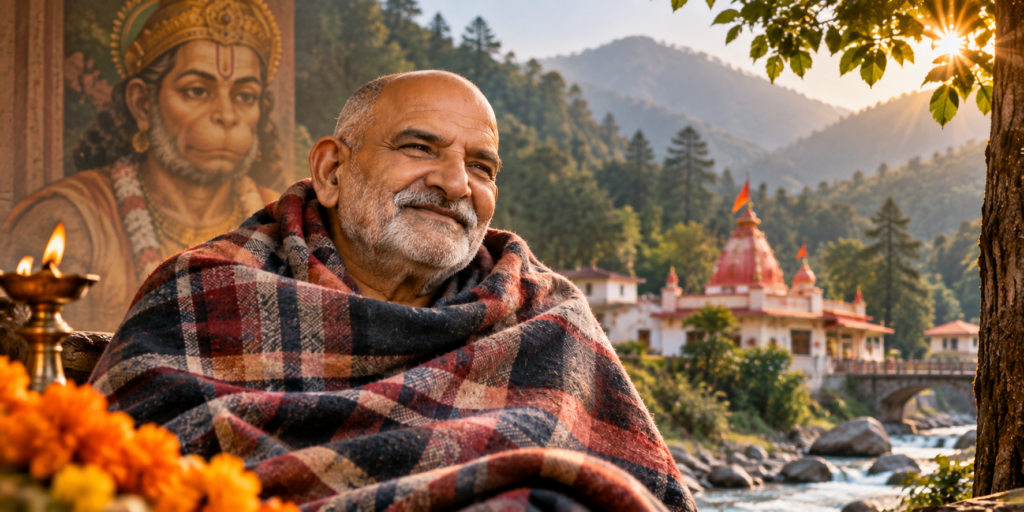
neem-karoli-baba-maharaj-ji.jpg
Neem Karoli Baba was a Hindu saint and spiritual teacher who became particularly associated with Hanuman bhakti, seva (selfless service), devotion and remembrance of God.
He is also known as Neeb Karori Baba, Neem Karoli Baba and, among his devotees, simply Maharaj-ji.
His birth name is generally given as Lakshmi Narayan Sharma, and accounts place his birth in the early 1900s in Akbarpur, Uttar Pradesh.
According to biographical and devotional accounts, he was born into a prosperous family and showed an unusual inclination toward spiritual life from a very young age.
But his story is not the story of a man who simply abandoned the world.
Before becoming the wandering sadhu whom thousands would eventually seek, he entered into family life at an extraordinarily young age.
That lesser-known chapter is essential to understanding his journey.
Neem Karoli Baba’s Childhood and Early Family Life
The childhood of Neem Karoli Baba is one of the least documented and most fascinating parts of his story.
Traditional accounts place his birth in Akbarpur, Uttar Pradesh, in the early 1900s. His family was reportedly prosperous, and he grew up in a social environment where traditional customs and family expectations played an important role.
One of the most striking details preserved in accounts of his life is that he was married at around the age of eleven.
His bride was Ram Beti, also referred to in some accounts as Ram Beti Sharma or Devi.
The marriage was a traditional arranged marriage, reflecting the social customs prevalent in many parts of rural India during that period.
Today, a marriage at such a young age is rightly viewed very differently. It is important to understand this historical detail in its social context rather than romanticize it.
Yet for the story of Neem Karoli Baba, this early marriage became an important part of the unusual path his life would take.
He was still a child when he became a husband.
And soon afterward, according to traditional accounts, he began to feel the powerful pull of spiritual life.
Ram Beti: The Woman Behind the Saint’s Family Life
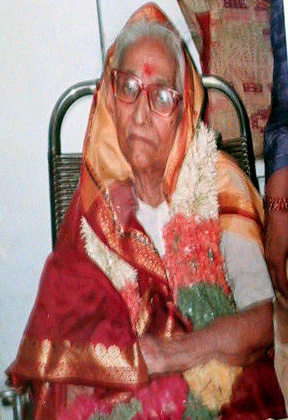
ram-beti-neem-karoli-baba-wife.jpg

When people hear the name Neem Karoli Baba, they usually picture the saint wrapped in his familiar blanket, surrounded by devotees.
Very few people think about the woman who remained connected to his family life.
Ram Beti lived a remarkably private life compared with the worldwide fame that eventually surrounded her husband.
Accounts describe her as remaining in their home village of Akbarpur in Uttar Pradesh, where she cared for the family and raised their children while Maharaj-ji increasingly devoted himself to his spiritual path.
This part of the story deserves attention because the spiritual biography of a famous saint can sometimes make the people around him disappear from the narrative.
Ram Beti did not become a public spiritual celebrity.
She did not travel the world.
She did not write famous books.
She simply remained connected to the family and carried the responsibilities of home and children.
In that sense, her story represents another kind of service—quiet, domestic and largely unseen.
And perhaps that is why it is so important to include her when telling the complete story of Neem Karoli Baba.
Neem Karoli Baba’s Early Wandering as a Sadhu
Shortly after his childhood marriage, Neem Karoli Baba reportedly left home and began wandering as a sadhu, or spiritual ascetic.
Accounts describe a young man increasingly drawn away from ordinary worldly life and toward spiritual seeking.
But his first departure was not necessarily permanent.
According to traditional accounts, his father eventually asked him to return home.
He did.
For a period, he lived a settled family life.
This detail is particularly fascinating because it shows that Maharaj-ji’s renunciation did not happen as one simple, dramatic event.
There appears to have been a tension between two worlds:
the world of family duty and the call of spiritual life.
He experienced both.
He knew what it meant to belong to a family.
He knew what it meant to shoulder household responsibilities.
And he also knew the pull of the wandering life of a seeker.
Eventually, the spiritual calling became stronger.
A Father of Three
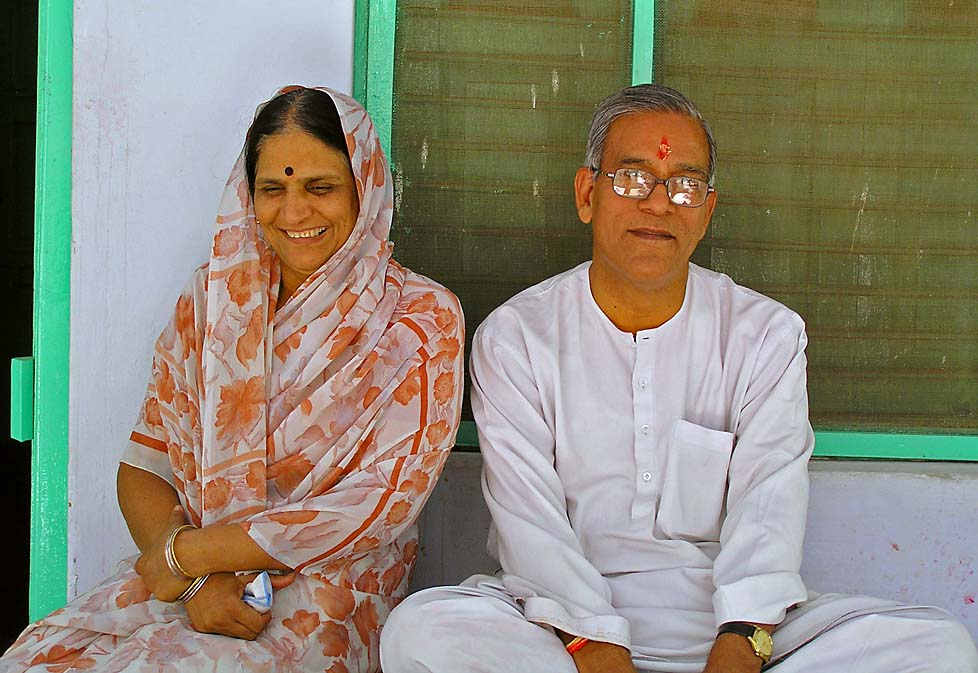

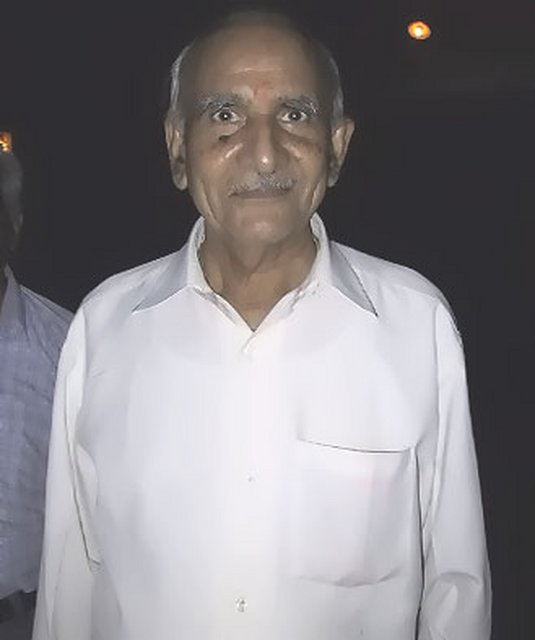
neem-karoli-baba-family-ram-beti-children.jpg

Neem Karoli Baba and Ram Beti had three children.
They had two sons:
- Anek Singh
- Dharma Narayan Sharma
and a daughter:
- Girija
The children grew up largely away from the public spiritual world that later formed around their father.
This is an important contrast.
To millions of people, Neem Karoli Baba became an almost mythical spiritual figure.
But to his family, he was also a husband and father.
His family life reminds us that great spiritual biographies are not always simple stories of someone who was born apart from ordinary human relationships.
Maharaj-ji knew family life firsthand.
He knew attachment.
He knew responsibility.
He knew the emotional complexity of leaving loved ones.
And that makes his later emphasis on duty, service, compassion and surrender particularly interesting.
The Difficult Question of Renunciation
At some point, Neem Karoli Baba once again left behind the settled family life and increasingly embraced the life of a spiritual seeker.
His wife, Ram Beti, remained associated with the family home in Akbarpur and continued raising their children.
This part of his biography should be approached with sensitivity.
It is tempting to turn the story into a simple romantic tale:
“He left everything to find God.”
But there was another side to that decision.
Someone remained behind to manage the responsibilities he had once shared.
That person was his wife.
Her story is quieter, but it is part of the same life journey.
Perhaps one of the most human ways to understand Maharaj-ji’s renunciation is to recognize that spiritual journeys can affect not only the person who undertakes them, but also the people who remain connected to them.
This does not diminish his spiritual legacy.
It makes the story more complete.
From Family Man to Wandering Saint
After leaving settled family life, Neem Karoli Baba continued his spiritual journey.
He wandered through northern India, lived as a sadhu and became increasingly associated with places where devotees began to gather around him.
Over time, the young man who had once been known within his family simply became Baba.
Then Neem Karoli Baba.
And eventually, for his devotees:
Maharaj-ji.
The transformation was not accompanied by a conventional career or public campaign.
There was no carefully designed spiritual brand.
His reputation travelled through people.
Someone met him.
Something happened.
That person told another person.
Another devotee came.
Another story emerged.
And slowly, his name spread.
The Wandering Years
Before Kainchi Dham became the spiritual home associated with him, Neem Karoli Baba spent years moving through different parts of northern India.
He was not a saint famous for giving lengthy philosophical lectures.
He was often seen sitting quietly, wrapped in his familiar blanket, speaking casually with whoever happened to be around.
Sometimes he joked.
Sometimes he scolded.
Sometimes he seemed completely ordinary.
And sometimes, according to his devotees, something happened that they could not explain.
This unusual mixture of simplicity and mystery became one of the defining characteristics of his personality.
Ram Dass and other devotees remembered Maharaj-ji as unpredictable, humorous, affectionate and sometimes fiercely direct.
He did not behave like the stereotypical image of a solemn guru.
And perhaps that was part of his teaching.
The Railway Miracle That Became Legendary
One of the most famous stories associated with Neem Karoli Baba concerns a train.
According to a traditional account preserved by Swami Chidananda of the Divine Life Society, Baba once boarded a train without a ticket and was asked to leave.
He got down.
The train reportedly would not move.
Railway officials tried to determine what had happened, but the problem apparently remained unresolved.
Eventually, Baba was asked to return to the train.
According to the story, once he was back on board, the train began moving.
The incident became one of the earliest and most famous miracle stories associated with him.
For devotees, it was evidence of Baba’s extraordinary spiritual power.
From a historical perspective, however, it remains a traditional account rather than an independently verified supernatural event.
And that distinction is worth preserving.
A biography does not need to tell the reader what to believe.
It can simply tell the story honestly and allow the reader to decide what it means.
Why Was Neem Karoli Baba Associated With Hanuman?
To understand Neem Karoli Baba, one must understand his devotion to Lord Hanuman.
Hanuman was not merely a deity he worshipped.
Hanuman represented the ideal of complete devotion.
Strength without ego.
Power without pride.
Service without expectation.
And unwavering love for Lord Rama.
These qualities were reflected in the way Maharaj-ji lived and taught.
Many devotees eventually came to believe that Neem Karoli Baba himself was a manifestation or incarnation of Hanuman.
This is a devotional belief, not something that can be historically proven.
But it is central to understanding how his closest devotees viewed him.
To them, Baba was not simply a spiritual teacher.
He was Maharaj-ji—a living presence through whom they experienced the grace of Hanuman and the love of God.
The Blanket of Maharaj-ji
If you have ever seen a photograph of Neem Karoli Baba, you probably remember one thing immediately.
The blanket.
He was frequently photographed wrapped in a simple woolen blanket, sitting on his wooden cot or surrounded by devotees.
There was nothing extravagant about his appearance.
No elaborate throne.
No royal robes.
No display of wealth.
Just a simple man wrapped in a blanket.
And somehow, that image became one of the most recognizable representations of an Indian saint in the modern era.
His outward simplicity was striking because the stories surrounding him were anything but simple.
Devotees attributed extraordinary powers to him.
They described healings, unusual knowledge, protection and miraculous events.
Yet the man in the photograph looks almost completely ordinary.
Perhaps that is part of the mystery.
Kainchi Dham: The Sacred Home of Maharaj-ji

kainchi-dham-neem-karoli-baba.jpg

Among all the places associated with Neem Karoli Baba, none is more famous than Kainchi Dham.
Nestled in the Kumaon hills of Uttarakhand, Kainchi Dham is now one of the most important pilgrimage destinations associated with Maharaj-ji.
The ashram is particularly associated with Hanuman worship, seva and the distribution of prasad.
The place itself has a special atmosphere.
The mountains rise around it.
A river flows nearby.
The temples and ashram buildings sit within the green landscape.
But the real importance of Kainchi is not simply its beauty.
It is the community that grew around Baba there.
People came with problems.
People came with questions.
People came looking for miracles.
And many left with something much simpler:
the feeling that they were loved.
The Kainchi Dham Bhandara
One of the most beautiful expressions of Maharaj-ji’s teachings is the tradition of feeding people.
Food at Kainchi is not merely food.
It is prasad.
It is seva.
It is an expression of love.
The culture surrounding Maharaj-ji repeatedly emphasizes feeding people without asking who they are, how wealthy they are or what social position they occupy.
This is entirely consistent with the teaching attributed to him:
Serve everyone.
For Maharaj-ji, spirituality was not supposed to remain inside the meditation room.
It could happen in the kitchen.
It could happen while feeding a stranger.
It could happen while washing dishes.
It could happen while helping someone who was suffering.
That is why seva became such a central part of his path.
The Miracles of Neem Karoli Baba
No article about Neem Karoli Baba would be complete without discussing the many miracles attributed to him.
But this is also where we need to be careful.
There are hundreds of stories told by devotees.
Some were recorded by people who personally met him.
Others have been passed down through oral tradition.
Some have no independent documentation.
Rather than declaring every story to be historical fact, it is better to understand them as part of the devotional tradition surrounding Maharaj-ji.
Here are some of the most memorable.
The Train That Would Not Move
The railway story remains perhaps the most famous.
Baba allegedly refused to buy a ticket, was removed from the train and then somehow became the reason the train could not continue.
Whether one sees it as a miracle or a devotional story, it became a powerful part of his legend.
The Mysterious Orange Story
One of the more charming stories comes from Swami Chidananda’s account of meeting Baba.
A small number of oranges were reportedly brought as an offering.
Baba began distributing them.
But somehow, according to the account, more oranges were handed out than had originally been placed in the basket.
The witness could not explain where the additional fruit had come from.
It is exactly the sort of small, almost playful miracle that appears repeatedly in stories about Maharaj-ji.
Not thunderbolts.
Not dramatic displays.
Sometimes just oranges.
Stories of Healing and Protection
Many devotees believed Maharaj-ji possessed extraordinary healing powers.
Stories describe people receiving blessings, recovering from illnesses or being protected from danger.
Some devotees believed Baba knew about someone’s illness before being told.
Others felt that simply receiving his prasad or blessing changed their lives.
These accounts should be understood as devotee testimonies rather than medical evidence.
For the people who experienced them, however, they were deeply meaningful.
Maharaj-ji’s Greatest Miracle May Have Been Love
There is another way to look at the miracle stories.
Perhaps the most important “miracle” associated with Neem Karoli Baba was not making a train move or multiplying food.
It was what happened to people around him.
People changed.
People became more compassionate.
People began serving others.
People who had been searching for meaning found direction.
A Harvard psychologist travelled to India and returned as Ram Dass.
Doctors, activists, musicians and seekers found themselves drawn toward lives of service and devotion.
And ordinary householders began seeing everyday responsibilities as opportunities for spiritual practice.
That may be the most enduring miracle of all.
Richard Alpert Meets Neem Karoli Baba
In 1967, an American psychologist named Richard Alpert travelled to India.
He had been a Harvard professor and had become well known through his work exploring altered states of consciousness alongside Timothy Leary.
He arrived in India as a seeker.
Then he met Neem Karoli Baba.
Everything changed.
Baba gave him a new name:
Ram Dass — servant of God.
The encounter became the turning point of Alpert’s life.
Ram Dass later wrote Be Here Now, published in 1971, and became one of the most influential teachers to introduce Indian spiritual ideas to Western audiences.
Through Ram Dass, millions of people who had never heard of Neem Karoli Baba encountered the name Maharaj-ji.
Neem Karoli Baba and Ram Dass
The relationship between Baba and Ram Dass is one of the most remarkable parts of this story.
Richard Alpert had been deeply involved in intellectual and scientific exploration.
But Neem Karoli Baba offered something different.
Not another theory.
Not another academic explanation.
Not another intellectual system.
He offered devotion.
He directed Ram Dass toward service, remembrance and love.
The result was not the disappearance of intelligence.
It was the transformation of how that intelligence was used.
Ram Dass spent the rest of his life sharing what he had learned.
His books, talks and teachings carried Maharaj-ji’s influence far beyond India.
What Did Neem Karoli Baba Actually Teach?
Interestingly, Maharaj-ji was not famous for delivering long philosophical lectures.
His teachings often emerged through conversations, actions, jokes, scolding and everyday situations.
One of his central teachings was seva—selfless service.
The emphasis was on doing one’s work with love and remembrance of God.
This is a remarkably practical form of spirituality.
You don’t have to escape your life.
You can transform the way you live it.
And perhaps Maharaj-ji’s own complicated journey—from child husband to family man, from wandering sadhu to spiritual teacher—makes this teaching even more meaningful.
Love Everyone
This may be the simplest of Maharaj-ji’s teachings—and perhaps the hardest.
Love everyone.
Not just people who love you.
Not just people who agree with you.
Not just people who are kind to you.
Everyone.
Stories preserved by devotees describe Baba’s striking religious inclusiveness.
For Maharaj-ji, seeing God meant learning to see the Divine in other people.
Serve Everyone
Maharaj-ji’s spirituality was intensely practical.
He did not seem interested in spirituality that remained only in words.
Feed someone.
Help someone.
Care for someone.
Do your work.
Look after your family.
Give what you can.
And do it without constantly asking, “What will I get in return?”
That is seva.
And that is why kitchens, food, prasad and service became so important around him.
Remember God
The third part completes the teaching.
Love.
Serve.
Remember.
Service without remembrance can become mere activity.
Remembrance without service can become self-absorbed spirituality.
Maharaj-ji’s teaching brought the two together.
Work, but remember God.
Serve, but remember God.
Feed someone, but remember God.
Raise your children, but remember God.
Do your duty, but remember God.
Spirituality was not necessarily a separate part of life.
Life itself could become spiritual practice.
The Story of the Angry Devotee
Many of Maharaj-ji’s teaching stories have a wonderfully human quality.
He could teach without giving a lecture.
He might put someone into a situation that revealed their own ego.
He might praise someone one moment and scold them the next.
He might appear to ignore a person’s question while answering something much deeper underneath it.
That was part of his method.
The devotee came looking for answers.
Baba often gave them an experience instead.
And sometimes the lesson was uncomfortable.
Because spiritual growth isn’t always about feeling peaceful.
Sometimes it means discovering just how much anger, ego, fear or attachment is still inside us.
“Only Sick People Come to a Doctor”
One of the most memorable teachings attributed to Maharaj-ji came in response to a simple question.
Why were so many difficult, troublesome people always around him?
His answer was essentially:
Only sick people go to a doctor.
What a beautiful answer.
A doctor doesn’t complain that sick people keep coming.
That is precisely why the doctor exists.
In the same way, a spiritual teacher should not reserve compassion for people who already have everything figured out.
Maharaj-ji’s devotees included people who were confused, wounded, difficult and lost.
He welcomed them.
And that tells us something about his understanding of compassion.
The Strange Wisdom of Maharaj-ji
Maharaj-ji’s teaching style could be bewildering.
He might answer a serious question with a joke.
He might scold someone who expected praise.
He might suddenly change the subject.
He might appear to know something about a person’s life that they had never told him.
For his devotees, these experiences were part of his lila—the Divine play.
One story preserved in the Ram Dass tradition involves Baba’s involvement in a devotee’s marriage. After the events unfolded, Baba reminded the devotee that neither guru nor disciple should assume complete ownership of what had happened.
God plays the lila.
The deeper lesson was surrender.
We often imagine that we control our lives completely.
Maharaj-ji’s teaching suggested otherwise.
We have responsibilities.
We have choices.
But life is larger than our plans.
Neem Karoli Baba and Religious Unity
Although Maharaj-ji was deeply devoted to Hanuman and Rama, his teachings were not narrow.
Stories from his devotees describe him interacting with people of different religious backgrounds and rejecting religious prejudice.
His message was not:
“My God versus your God.”
It was closer to:
Find the Divine wherever you are able to find it.
This universal quality helped his teachings travel beyond traditional Hindu circles.
The Western Devotees
After Ram Dass returned to the West, other seekers followed the path that had opened through him.
Among those influenced by Maharaj-ji were people who later became known for medicine, public health, music, writing and spiritual teaching.
One of the most notable was Larry Brilliant, a physician who later became involved in global public health and the eradication of smallpox.
The story of his connection with Maharaj-ji has become part of the larger legacy of Baba: the idea that spiritual guidance could lead not away from the world, but deeper into service to humanity.
This is an important distinction.
Maharaj-ji’s influence was not simply about creating more devotees.
For many people, it was about sending them back into the world to do something useful.
Steve Jobs and Neem Karoli Baba
Few modern stories have connected Neem Karoli Baba with the world of technology as strongly as the story of Steve Jobs.
Jobs travelled to India in the 1970s seeking spiritual answers and visited Kainchi Dham.
But there is an important detail that is often missed online:
Steve Jobs did not meet Neem Karoli Baba.
By the time Jobs visited Kainchi, Maharaj-ji had already died in 1973.
So the popular claim that “Steve Jobs met Neem Karoli Baba” is inaccurate.
What is historically interesting is that Jobs was nevertheless drawn to the place associated with Baba and that the ashram remained part of his spiritual journey.
The distinction matters.
The real story is already fascinating enough.
Why Do Entrepreneurs Still Visit Kainchi Dham?
The connection between Kainchi Dham and Western technology culture has grown over the decades.
Stories involving Steve Jobs and later technology leaders have contributed to the ashram’s modern reputation.
But perhaps the deeper reason is easier to understand.
Technology rewards speed.
Maharaj-ji’s teaching points toward stillness.
Technology encourages optimization.
Maharaj-ji emphasized surrender.
Technology asks:
What can I achieve?
His teaching asks:
Whom can I serve?
That contrast may be precisely why spiritually curious people continue to find their way to places like Kainchi.
The Final Years of Neem Karoli Baba
By the early 1970s, Maharaj-ji’s influence had already spread well beyond the Kumaon hills.
Kainchi had become an important spiritual center.
Western seekers had begun arriving.
Indian devotees continued to gather around him.
Yet his lifestyle remained remarkably simple.
There was no grand attempt to create a personality cult.
He remained Maharaj-ji.
The man in the blanket.
The man who fed people.
The man who joked, scolded, blessed and sometimes left everyone confused.
And then came September 1973.
Neem Karoli Baba’s Mahasamadhi
Neem Karoli Baba left his physical body on 11 September 1973 in Vrindavan.
Devotees refer to his passing as his mahasamadhi.
Historically, we can say that he died in 1973.
Spiritually, his followers understand the event differently: not simply as the death of a human being, but as the conscious departure of a realized soul.
That difference in language is important.
A biography can respect the faith of devotees without presenting spiritual beliefs as scientific facts.
And perhaps the most poignant thing about Baba’s passing is what happened afterward.
His physical presence disappeared.
His influence did not.
What Happened to His Family After His Renunciation?
The public story of Neem Karoli Baba largely follows his spiritual journey.
The quieter story belongs to his family.
His wife, Ram Beti, remained associated with the family’s home in Akbarpur, where she raised their children.
Their three children—Anek Singh, Dharma Narayan Sharma and Girija—belonged to the part of Maharaj-ji’s life that existed away from the ashrams, foreign devotees and miracle stories.
This is a reminder that the saint whom the world came to know as Maharaj-ji had once belonged to a family.
He had a home.
He had a wife.
He had children.
He had responsibilities.
And then his path took him far beyond the boundaries of ordinary domestic life.
That quieter family chapter should not be forgotten simply because the later spiritual story became more famous.
In fact, it makes his life more profound.
He did not discover spirituality in a vacuum.
He had experienced the human world before devoting himself almost completely to spiritual service.
What Happened After Neem Karoli Baba’s Death?
In some ways, the story of Neem Karoli Baba became even larger after 1973.
Ram Dass continued teaching.
Be Here Now reached millions.
Stories of Maharaj-ji circulated among devotees.
Kainchi Dham became increasingly important as a pilgrimage center.
His photographs appeared in homes around the world.
People who had never seen him in person began calling him Maharaj-ji.
And the same three teachings continued to travel:
Love everyone.
Serve everyone.
Remember God.
Why Is Neem Karoli Baba Still So Popular Today?
Perhaps because his message does not require us to become someone else.
He doesn’t ask us to become perfect.
He doesn’t ask us to know every scripture.
He doesn’t ask us to live in a Himalayan cave.
He asks us to begin with what is already in front of us.
The person sitting beside us.
The family waiting at home.
The stranger who needs help.
The work we have been given.
The food we can share.
The anger we need to overcome.
The ego we need to surrender.
The God we need to remember.
That is an extraordinarily practical form of spirituality.
Neem Karoli Baba’s Legacy
Today, his legacy can be seen in several places.
Kainchi Dham remains a major pilgrimage destination.
Ram Dass’s writings continue introducing new generations to Maharaj-ji.
The Love Serve Remember Foundation continues preserving and sharing the teachings associated with Ram Dass and Neem Karoli Baba.
But perhaps most importantly, thousands of devotees continue to express his teachings through seva.
That is the part of his legacy that deserves the most attention.
Not how many miracles he performed.
Not how many famous people visited his ashram.
But how many people were inspired to become a little more loving.
A little more generous.
A little more willing to serve.
Was Neem Karoli Baba Really a Miracle Worker?
This is perhaps the question every reader eventually asks.
The honest answer is:
It depends on what you mean by “really.”
There are numerous miracle stories preserved by people who met him.
Some devotees considered these experiences undeniable evidence of his spiritual powers.
Others may interpret the same events as coincidence, memory, symbolism or faith.
Many stories cannot be independently verified.
And that is okay.
We do not have to force every story into either “fact” or “fake.”
A mature understanding of Neem Karoli Baba allows both history and faith to have their place.
The historical record tells us that there was a man who lived, travelled, gathered devotees, established spiritual centers and influenced people whose later lives became historically significant.
The devotional record tells us that those who encountered him experienced something much larger.
The miracle, perhaps, lies in the transformation.
The Greatest Teaching of Neem Karoli Baba
After reading hundreds of stories about a saint, it is tempting to search for the biggest miracle.
The train.
The healing.
The mysterious appearance.
The impossible knowledge.
But perhaps Maharaj-ji himself would have found that question slightly amusing.
Because his message was remarkably simple.
Love everyone.
Serve everyone.
Remember God.
Imagine applying those three instructions to everyday life.
Before reacting in anger:
Remember God.
When someone needs help:
Serve.
When dealing with someone difficult:
Love everyone.
When life doesn’t go according to plan:
Surrender.
When success arrives:
Don’t let the ego take over.
When someone is suffering:
Do something.
Suddenly, spirituality is no longer something reserved for temples and ashrams.
It becomes a way of living.
Neem Karoli Baba: A Saint Who Left No Ordinary Biography
Perhaps the greatest irony of Neem Karoli Baba’s life is that the man who left behind so few conventional facts has inspired so many stories.
We may never know every detail of his childhood.
We may never be able to verify every miracle.
We may never completely understand what his closest devotees experienced in his presence.
But we know something else.
We know that he was a child who entered family life unusually early.
We know that he had a wife, Ram Beti, and three children.
We know that he left home more than once in search of a spiritual life.
We know that he eventually became one of India’s best-known modern saints.
We know that people who met him remembered him for decades.
We know that one of those people, Richard Alpert, became Ram Dass and helped bring his guru’s teachings to millions.
We know that Kainchi Dham became a place of pilgrimage.
We know that his message of love and service crossed cultures and continents.
And we know that, more than fifty years after his passing, people still sit quietly before his photograph and call him by the same affectionate name:
Maharaj-ji.
Perhaps that is the only biography he ever really needed.
Not a list of achievements.
Not a monument to himself.
Just a living reminder:
Love everyone.
Serve everyone.
Remember God.
And perhaps, in the middle of our increasingly noisy lives, that simple message is exactly why Neem Karoli Baba still speaks to so many hearts.
Frequently Asked Questions About Neem Karoli Baba
Who was Neem Karoli Baba?
Neem Karoli Baba, also known as Maharaj-ji, was a Hindu saint and spiritual teacher associated particularly with Hanuman devotion, seva and remembrance of God. His most famous ashram is Kainchi Dham in Uttarakhand.
What was Neem Karoli Baba’s real name?
His birth name is generally given as Lakshmi Narayan Sharma. Different accounts and traditions use variations in the spelling of his name and describe different stages of his wandering life.
When was Neem Karoli Baba born?
His exact birth date is uncertain. Most accounts place his birth in the early 1900s in Akbarpur, Uttar Pradesh.
Who was Neem Karoli Baba’s wife?
Neem Karoli Baba’s wife was Ram Beti, also referred to in some accounts as Ram Beti Sharma or Devi. They were married when they were both very young, in a traditional arranged marriage.
How old was Neem Karoli Baba when he got married?
Accounts generally state that he was approximately 11 years old when he was married to Ram Beti.
How many children did Neem Karoli Baba have?
Neem Karoli Baba and Ram Beti had three children: two sons, Anek Singh and Dharma Narayan Sharma, and a daughter, Girija.
Did Neem Karoli Baba leave his family?
According to traditional accounts, he left home after his childhood marriage to live as a wandering sadhu. At his father’s request, he returned for a period and lived a settled family life before eventually returning to his spiritual path.
His wife, Ram Beti, remained associated with the family home in Akbarpur and raised their children away from the public spotlight surrounding Maharaj-ji.
Why is Neem Karoli Baba famous?
He is famous for his spiritual teachings, devotion to Hanuman, emphasis on selfless service, numerous miracle stories and his influence on devotees including Ram Dass.
What are Neem Karoli Baba’s main teachings?
His teachings are commonly summarized as:
Love everyone.
Serve everyone.
Remember God.
He particularly emphasized selfless service and living everyday life as spiritual practice.
Was Neem Karoli Baba an incarnation of Hanuman?
Many devotees believe that Neem Karoli Baba was an incarnation or manifestation of Lord Hanuman. This is a devotional belief rather than a historically verifiable fact.
What is Kainchi Dham?
Kainchi Dham is an ashram and Hanuman temple complex in Uttarakhand associated with Neem Karoli Baba. It became one of the principal spiritual centers connected with his life and teachings.
Did Steve Jobs meet Neem Karoli Baba?
No. Steve Jobs visited Kainchi Dham after Neem Karoli Baba had already passed away in 1973. Therefore, the claim that Jobs personally met Baba is incorrect.
Who was Ram Dass?
Ram Dass was the spiritual name given to Richard Alpert, an American psychologist who met Neem Karoli Baba in India in 1967. He later wrote Be Here Now and became one of the most influential teachers of Indian spirituality in the West.
When did Neem Karoli Baba die?
Neem Karoli Baba died on 11 September 1973 in Vrindavan. His devotees refer to his passing as his mahasamadhi.
Final Thought
Maybe the most beautiful way to remember Neem Karoli Baba is not as a man who performed miracles.
Maybe it is to remember him as a man who made love and service into a spiritual path.
His story, however, was not only about a saint.
It was also about a young boy who became a husband.
A husband who became a father.
A father who felt the call of a different life.
A wandering sadhu who became Maharaj-ji.
And a simple man whose influence eventually travelled far beyond the villages and mountains of northern India.
Behind the photographs, the miracles and the legends was a human life filled with choices, relationships, responsibilities and an extraordinary spiritual calling.
His wife, Ram Beti, and their three children belonged to the quieter part of that story.
His devotees belonged to another.
Kainchi Dham became another chapter.
Ram Dass opened another.
And the millions who continue to remember him are writing yet another.
Perhaps miracles are extraordinary.
But kindness can happen every day.
A meal shared with someone hungry.
A hand offered to someone struggling.
A moment of patience when anger would be easier.
A little less ego.
A little more compassion.
A little remembrance of God.
That is a path anyone can walk.
And perhaps that is why, after all these years, the simplest words associated with Maharaj-ji still feel so powerful:
Love everyone.
Serve everyone.
Remember God.
If this story moved you, share it.
Explore more in Spiritual & Devotional →