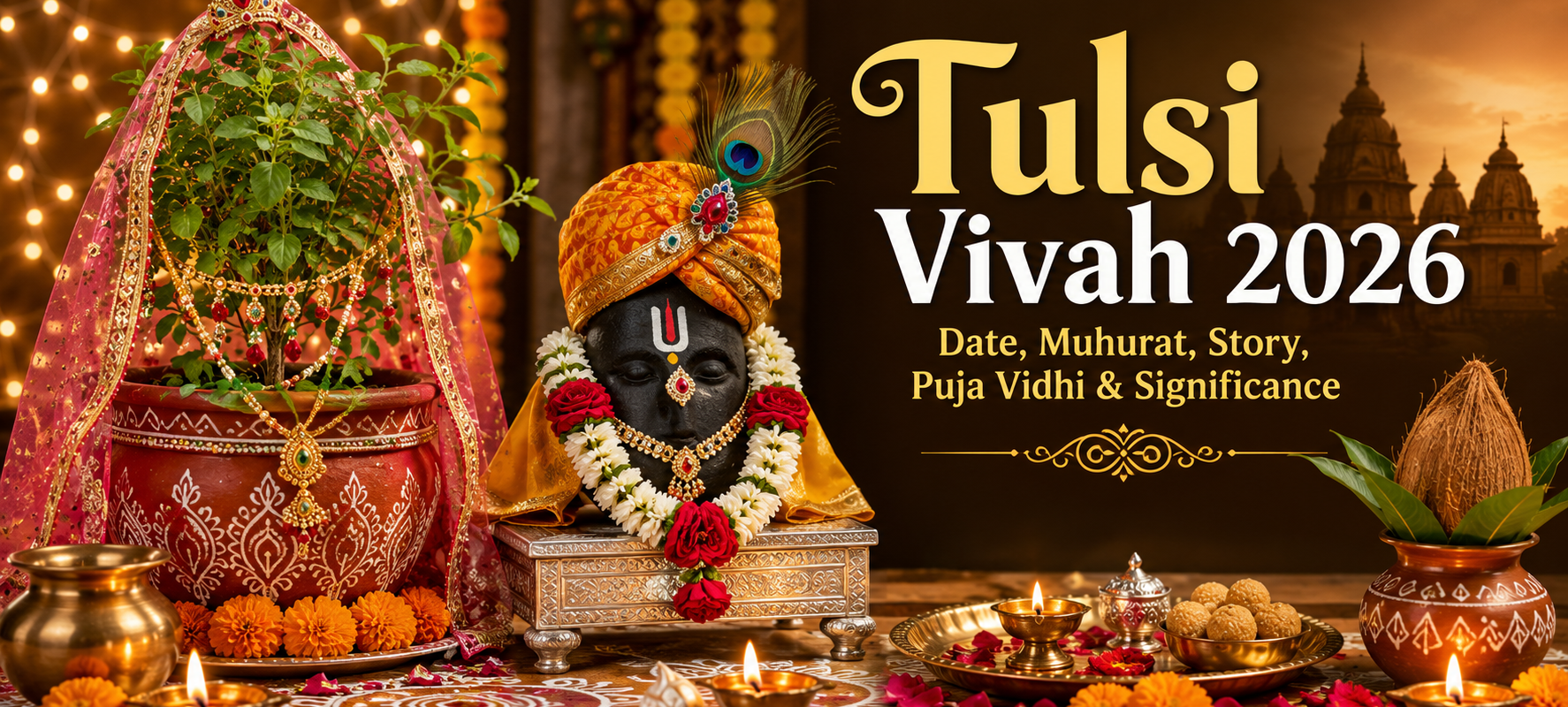
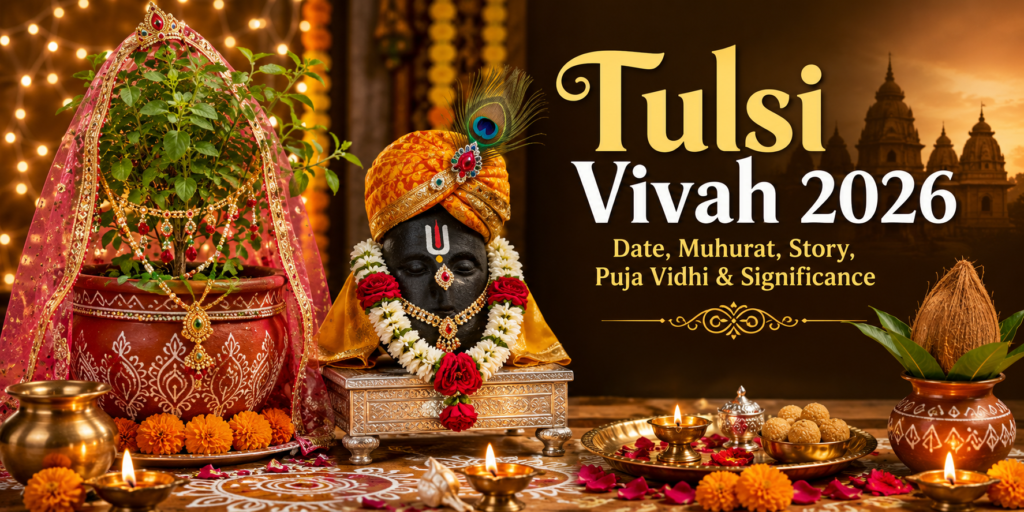
Tulsi Vivah 2026 marks the sacred marriage of Tulsi Mata and Lord Vishnu in the form of Shaligram. Explore the festival date, Muhurat, inspiring story of Vrinda and Jalandhar, Puja Vidhi, mantras, benefits, and spiritual significance in this complete guide.
tulsi-vivah-2026-date-story-puja-vidhi.jpg
Tulsi Vivah is one of the most sacred and spiritually significant festivals in Hinduism, symbolizing the divine marriage of Tulsi Mata (Goddess Vrinda) and Lord Vishnu, who is worshipped in the form of the Shaligram Shila. This beautiful ceremony marks the end of Chaturmas, the four holy months during which Lord Vishnu is believed to rest in Yoga Nidra, and it heralds the beginning of the Hindu wedding season.
Across India, devotees decorate the Tulsi plant like a bride, adorn the Shaligram with traditional ornaments, perform Vedic marriage rituals, sing devotional songs, and seek blessings for a happy married life, prosperity, and spiritual growth.
More than just a symbolic wedding, Tulsi Vivah celebrates unwavering devotion, purity, sacrifice, and the eternal union of the Divine.
In this complete guide, you’ll learn about Tulsi Vivah 2026 date, Muhurat, the fascinating story of Vrinda and Lord Vishnu, spiritual significance, and why this festival continues to be celebrated with deep faith across generations.
Tulsi Vivah 2026 Date & Muhurat
Tulsi Vivah in 2026 will be celebrated on Saturday, November 21, 2026.
The festival is traditionally observed on the Dwadashi Tithi of the Shukla Paksha in the Hindu month of Kartik, immediately after Dev Uthani Ekadashi, when Lord Vishnu is believed to awaken from His divine slumber.
Festival Details
- Festival: Tulsi Vivah
- Date: Saturday, November 21, 2026
- Tithi: Kartik Shukla Dwadashi (in many traditions; some observe on Ekadashi depending on local customs)
- Associated Deity: Tulsi Mata and Lord Vishnu (Shaligram)
- Significance: Symbolic marriage of Tulsi Mata and Lord Vishnu
Tulsi Vivah Muhurat
The Tulsi Vivah ceremony is generally performed during the daytime or Pradosh Kaal (early evening) after completing the daily worship.
As Muhurat timings vary by location and Panchang, devotees should check their local Panchang closer to the festival for the most auspicious time.
What Is Tulsi Vivah?
tulsi-vivah-2026-date-story-puja-vidhi.jpg
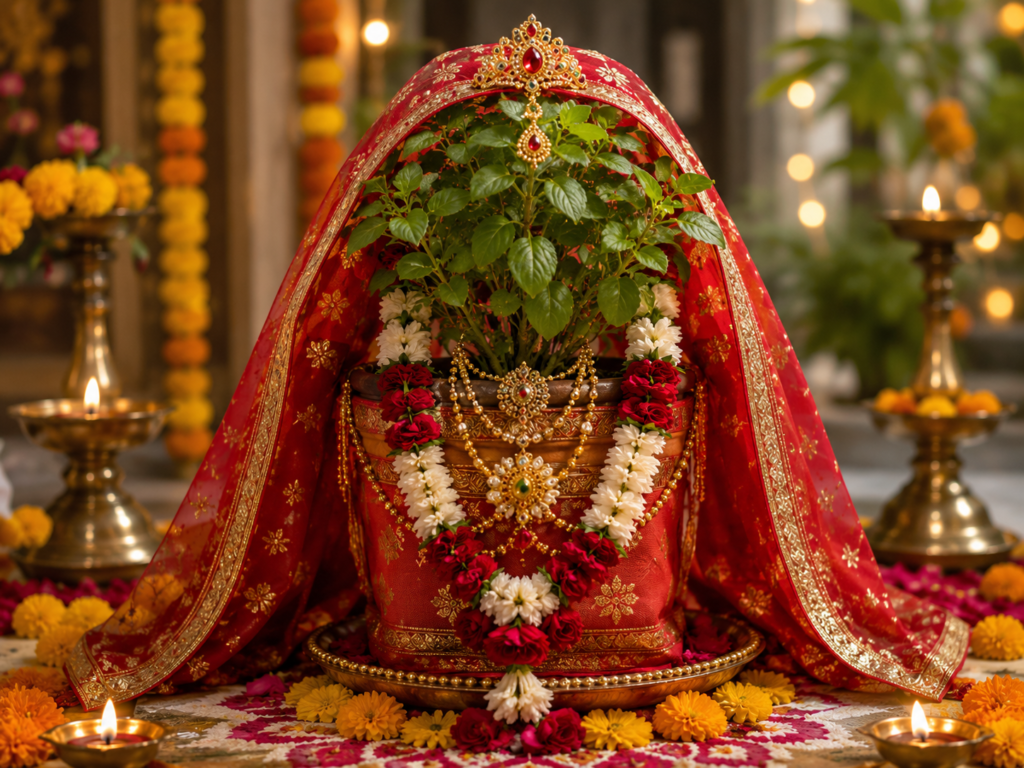
Tulsi Vivah is the ceremonial marriage of the sacred Tulsi plant with Lord Vishnu, usually represented by the Shaligram Shila, a sacred fossil stone worshipped as an embodiment of Lord Vishnu.
In Hindu homes, the Tulsi plant is not considered an ordinary plant. She is revered as Tulsi Mata, a divine manifestation associated with purity, devotion, and Goddess Lakshmi.
The marriage ceremony is conducted with the same devotion and rituals as a traditional Hindu wedding, including:
- Decorating the Tulsi plant as a bride
- Dressing the Shaligram as the groom
- Chanting Vedic mantras
- Offering flowers and sweets
- Performing aarti
- Circumambulating the sacred Tulsi plant
- Seeking blessings for prosperity and family harmony
Why Is Tulsi Vivah Celebrated?
Tulsi Vivah commemorates the divine story of Vrinda, whose unwavering devotion and purity transformed her into the sacred Tulsi plant.
The festival teaches timeless values such as:
- Unshakable faith
- Devotion to God
- Truth and righteousness
- Selfless sacrifice
- Divine grace
- Spiritual purification
At its heart, Tulsi Vivah celebrates the eternal union between devotion (Bhakti) and the Divine.
The Sacred Story of Vrinda and Jalandhar
tulsi-vivah-2026-date-story-puja-vidhi.jpg
The origin of Tulsi Vivah is rooted in one of the most inspiring legends from Hindu scriptures.
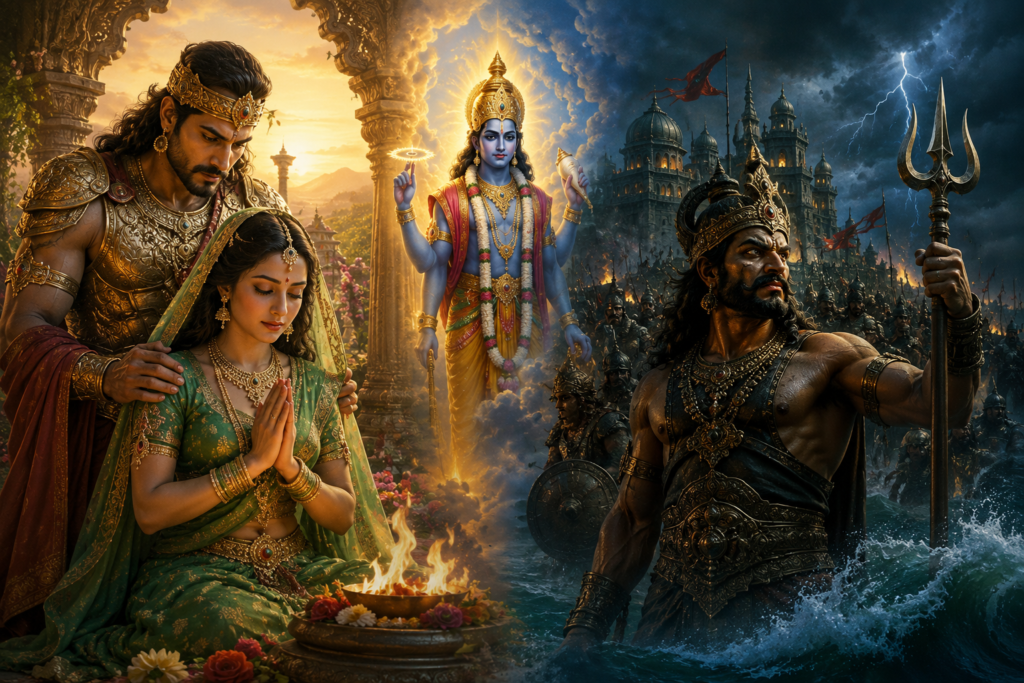
Long ago, there lived a mighty demon king named Jalandhar. Although born with immense strength and divine powers, his greatest source of protection was not his own might—it was the unwavering devotion of his wife, Vrinda.
Vrinda was a deeply devoted follower of Lord Vishnu. Her purity, faith, and spiritual discipline created a powerful shield around her husband, making him invincible even before the gods.
As long as Vrinda remained steadfast in her devotion and chastity, no celestial being could defeat Jalandhar.
Jalandhar Becomes Invincible
Empowered by Vrinda’s spiritual strength, Jalandhar challenged the gods and spread fear across the three worlds.
Even mighty deities found it impossible to defeat him.
Unable to restore balance, the gods sought the guidance of Lord Vishnu.
The challenge was unique—Jalandhar’s physical strength was not the true source of his power; it was the spiritual merit of Vrinda’s unwavering devotion.
Lord Vishnu’s Divine Intervention
To protect the universe from growing chaos, Lord Vishnu devised a divine plan.
Taking the form of Jalandhar, He appeared before Vrinda.
Believing the figure before her to be her husband, Vrinda’s unwavering spiritual vow was unintentionally broken.
At that very moment, the divine protection surrounding Jalandhar disappeared.
The gods were finally able to defeat him in battle, restoring peace and cosmic balance.
Vrinda’s Curse
When Vrinda realized what had happened, she was heartbroken.
Though she had always been a devoted worshipper of Lord Vishnu, she felt deeply betrayed.
In her sorrow, she cursed Lord Vishnu, declaring that He would become a stone.
Accepting her curse with compassion, Lord Vishnu transformed into the sacred Shaligram Shila, which has since been worshipped as one of His holiest forms.
The Birth of the Sacred Tulsi Plant
Filled with remorse for Vrinda’s suffering, Lord Vishnu blessed her with eternal honor.
He declared that she would be reborn as the sacred Tulsi plant, and that no worship offered to Him would be considered complete without Tulsi leaves.
He further promised that every year, devotees would ceremonially celebrate their divine union through Tulsi Vivah.
From that day onward, Tulsi became one of the most revered plants in Hindu tradition.
Even today, devotees lovingly offer Tulsi leaves to Lord Vishnu, Lord Krishna, and Shaligram during worship.
Why Is Tulsi Considered Sacred?
Tulsi holds a unique place in Sanatan Dharma.
She is regarded not merely as a medicinal plant but as a living embodiment of divine grace.
According to Hindu tradition, Tulsi symbolizes:
- Purity
- Devotion
- Prosperity
- Protection
- Spiritual awakening
- Divine blessings
For centuries, Hindu families have planted Tulsi in the courtyard of their homes, believing her presence brings peace, positive energy, and auspiciousness.
Daily worship of Tulsi is believed to purify the home and strengthen one’s connection with the Divine.
Spiritual Significance of Tulsi Vivah
Beyond the rituals, Tulsi Vivah conveys profound spiritual teachings.
Devotion Triumphs Over Power
Vrinda’s unwavering faith reminds us that spiritual strength surpasses worldly power.
Purity of Heart
The festival teaches that sincerity and purity in devotion are among the highest forms of worship.
Divine Grace
Even in moments of sorrow and hardship, divine compassion transforms suffering into spiritual elevation.
Sacred Marriage
The symbolic union of Tulsi and Lord Vishnu represents the eternal harmony between the devotee and the Divine.
Why Does Tulsi Vivah Mark the Beginning of the Wedding Season?
According to Hindu tradition, the four months of Chaturmas are reserved primarily for spiritual practices and are generally considered unsuitable for marriages and other major auspicious ceremonies.
With the awakening of Lord Vishnu on Dev Uthani Ekadashi, these restrictions come to an end.
Tulsi Vivah, celebrated immediately afterward, symbolically inaugurates the Hindu wedding season.
From this day onward, families begin organizing weddings and other auspicious ceremonies.
Life Lessons from Tulsi Vivah
The story of Tulsi Vivah offers timeless wisdom that remains relevant today.
- True devotion has immense spiritual power.
- Faith and righteousness ultimately triumph over ego.
- Forgiveness and compassion lead to transformation.
- Divine blessings often emerge from life’s greatest challenges.
- Love rooted in devotion is eternal.
These teachings make Tulsi Vivah much more than a ceremonial festival—it becomes a reminder of faith, humility, and the enduring relationship between humanity and the Divine.
Tulsi Vivah is far more than the symbolic marriage of a sacred plant and Lord Vishnu. It is a celebration of unwavering devotion, purity, sacrifice, and divine love.
The inspiring story of Vrinda and Lord Vishnu reminds us that sincere faith can transform sorrow into spiritual greatness and that devotion always finds a place in the heart of the Divine.
Tulsi Vivah Puja Vidhi, Puja Samagri, Mantras, Benefits & FAQs
After learning about the inspiring story of Vrinda and Lord Vishnu, let us understand how Tulsi Vivah is celebrated in Hindu homes. The rituals are simple yet deeply meaningful, symbolizing devotion, purity, and the sacred union of Tulsi Mata and Lord Vishnu.
Whether performed in a temple or at home, Tulsi Vivah is believed to bring divine blessings, prosperity, and harmony to the family.
Tulsi Vivah Puja Samagri (Required Items)
tulsi-vivah-2026-date-story-puja-vidhi.jpg
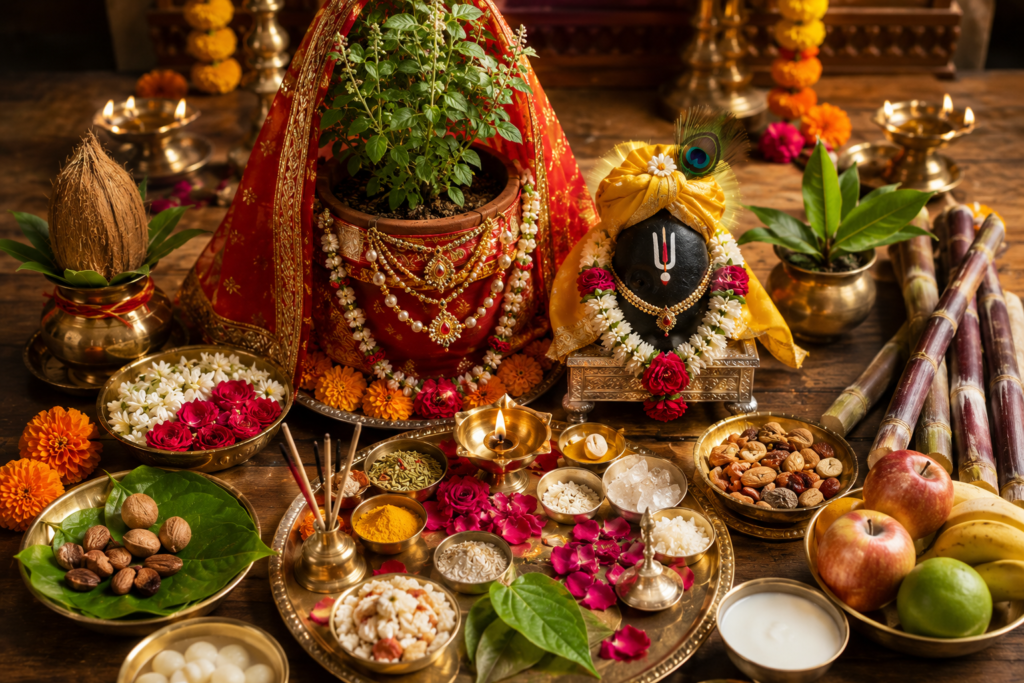
Before beginning the ceremony, arrange all the necessary puja items.
Essential Puja Items
- Tulsi Plant (Decorated as the Bride)
- Shaligram Shila or Lord Vishnu Idol/Image
- Red or Yellow Chunri
- Bridal Ornaments for Tulsi
- Small Cloth for Shaligram
- Sugarcane Stalks (for the symbolic Mandap)
- Flowers and Garlands
- Mango Leaves
- Kumkum
- Haldi (Turmeric)
- Chandan (Sandalwood Paste)
- Akshat (Unbroken Rice Grains)
- Tulsi Leaves
- Incense Sticks (Agarbatti)
- Camphor
- Ghee Diya
- Kalash with Water
- Coconut
- Panchamrit
- Fruits
- Dry Fruits
- Sweets
- Betel Leaves and Betel Nuts
- Aarti Plate
These sacred items represent purity, prosperity, devotion, and auspicious beginnings.
Tulsi Vivah Puja Vidhi (Step-by-Step)
The ceremony follows many customs of a traditional Hindu wedding.
Step 1: Clean the Puja Area
Clean the courtyard, balcony, or temple area where the Tulsi plant is placed.
Decorate the surroundings with rangoli, flowers, and diyas.
Step 2: Decorate Tulsi Mata
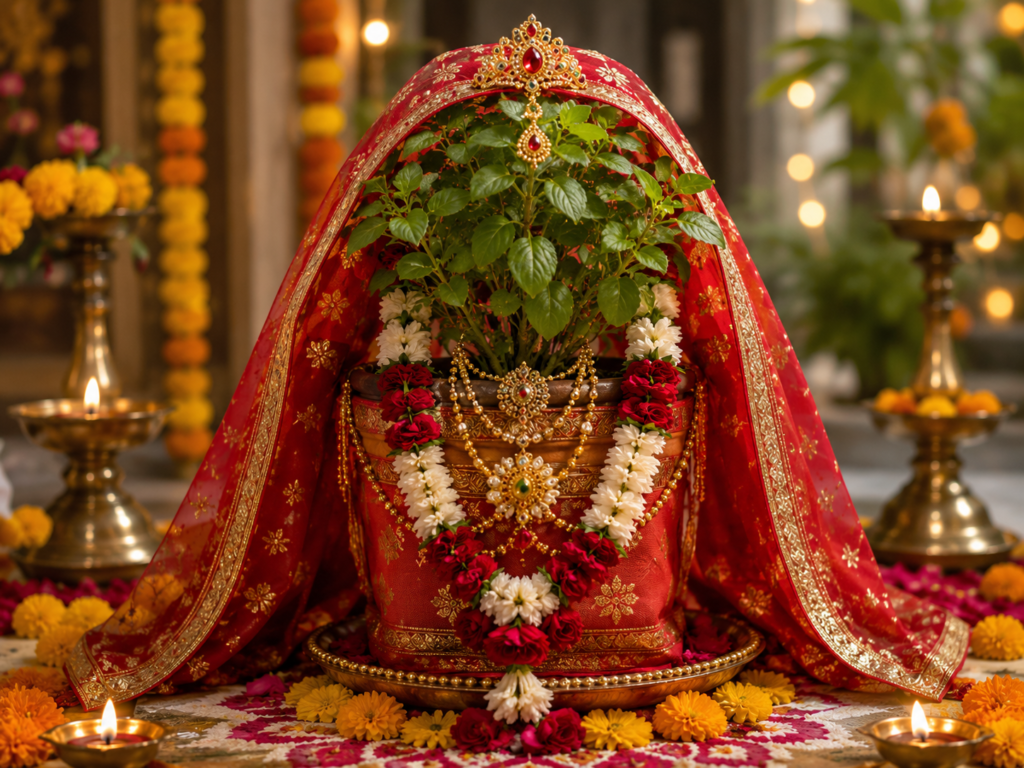
tulsi-vivah-2026-date-story-puja-vidhi.jpg
Dress the Tulsi plant like a bride.
Traditionally devotees decorate Tulsi with:
- Chunri
- Bangles
- Bindi
- Garland
- Decorative ornaments
Step 3: Prepare Lord Vishnu (Shaligram)
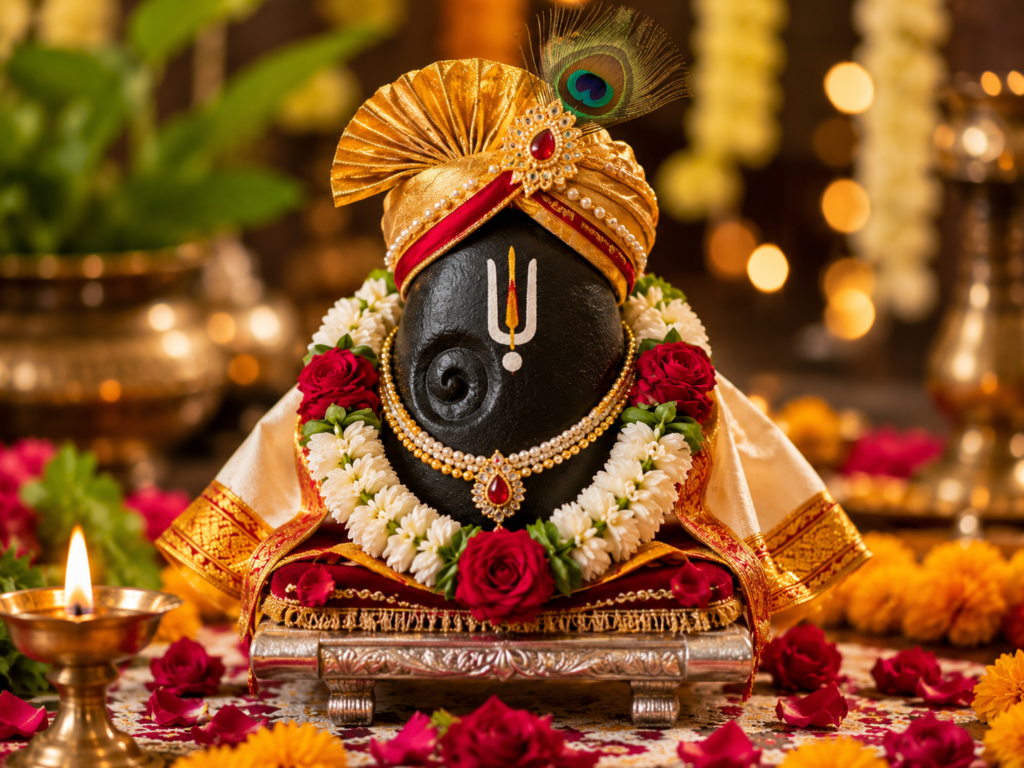
tulsi-vivah-2026-date-story-puja-vidhi.jpg
Place the Shaligram Shila or Lord Vishnu’s idol beside Tulsi.
Decorate it with:
- Yellow cloth
- Garland
- Chandan
- Tulsi leaves
Step 4: Build the Wedding Mandap
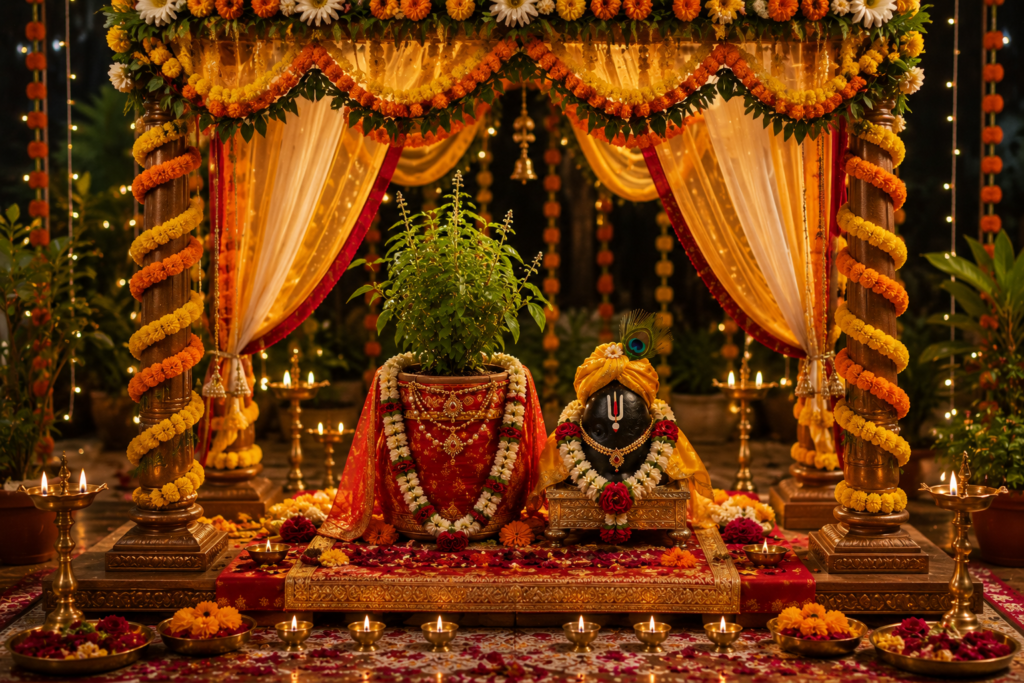
tulsi-vivah-2026-date-story-puja-vidhi.jpg
Many families prepare a small symbolic wedding mandap using sugarcane stalks, banana leaves, flowers, and colorful decorations.
This represents the sacred marriage pavilion.
Step 5: Begin the Puja
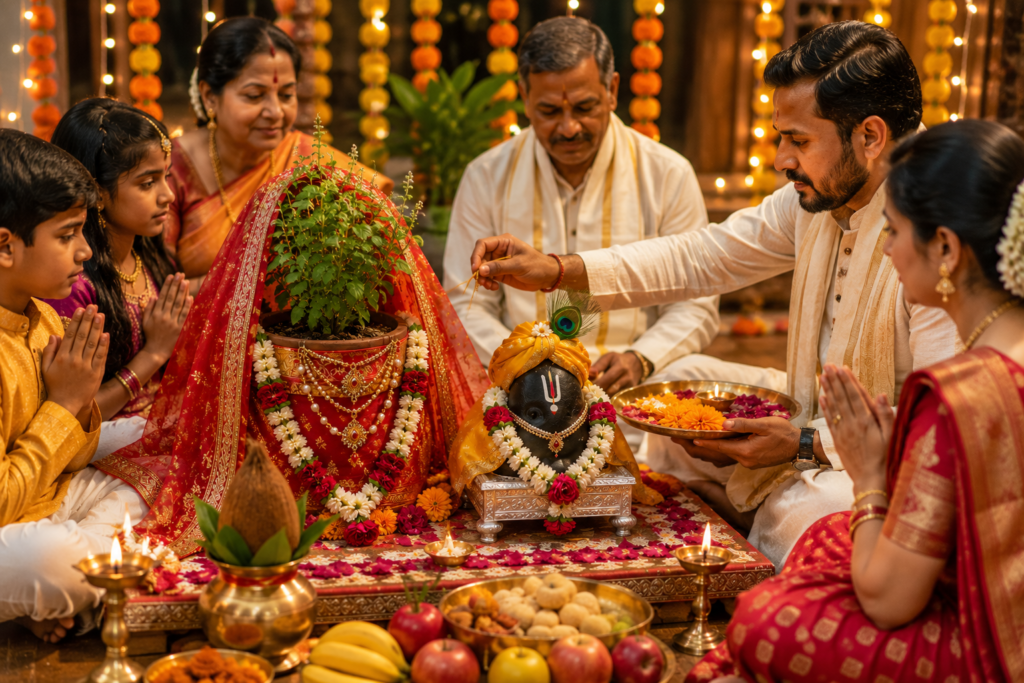
tulsi-vivah-2026-date-story-puja-vidhi.jpg
Light the diya and incense sticks.
Invoke Lord Ganesha before starting the ceremony.
Offer:
- Kumkum
- Haldi
- Akshat
- Flowers
- Chandan
to both Tulsi Mata and Lord Vishnu.
Step 6: Perform the Marriage Ceremony
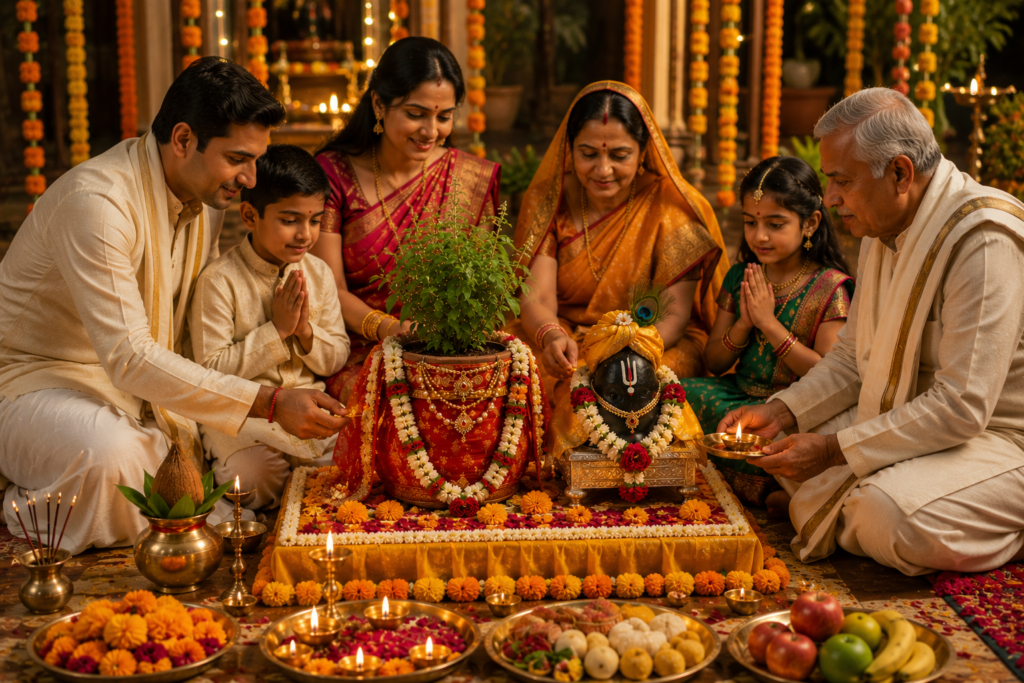
tulsi-vivah-2026-date-story-puja-vidhi.jpg
Tie a sacred thread or symbolic wedding knot between Tulsi Mata and Shaligram.
Some families perform the rituals exactly like a Hindu wedding, including:
- Kanyadaan
- Mangalashtak
- Exchange of garlands
- Circumambulation (Parikrama)
Step 7: Offer Bhog
Offer satvik food such as:
- Panchamrit
- Fruits
- Kheer
- Peda
- Ladoo
- Coconut
- Dry fruits
Step 8: Perform Aarti
Conclude the ceremony by performing Tulsi Vivah Aarti and praying for peace, prosperity, and family happiness.
Tulsi Vivah Mantras
1. Tulsi Mata Mantra
Sanskrit
ॐ तुलस्यै नमः।
English Transliteration
Om Tulasyai Namah
Meaning
“I bow to the sacred Tulsi Mata, who blesses devotees with purity, devotion, and divine grace.”
2. Lord Vishnu Mantra
Sanskrit
ॐ नमो भगवते वासुदेवाय।
English Transliteration
Om Namo Bhagavate Vasudevaya
Meaning
“I offer my humble salutations to Lord Vishnu, the Supreme Protector of the Universe.”
3. Tulsi Vivah Prayer
During the marriage ceremony, devotees may offer heartfelt prayers requesting:
- Marital harmony
- Family prosperity
- Good health
- Peace
- Devotion
- Spiritual growth
Even simple prayers offered with sincerity are considered highly auspicious.
Tulsi Vivah Vrat Rules
Many devotees observe a fast on Tulsi Vivah.
Common Vrat Practices
- Wake up early and take a holy bath.
- Wear clean or traditional clothes.
- Consume only satvik food.
- Avoid onion, garlic, alcohol, and non-vegetarian food.
- Chant Vishnu Sahasranama or Vishnu mantras.
- Read Tulsi Vivah Katha.
- Offer charity according to one’s capacity.
- Maintain a peaceful and devotional mindset.
The essence of the vrat lies in purity of thought, speech, and action.
Benefits of Performing Tulsi Vivah
According to Hindu tradition, performing Tulsi Vivah with devotion is believed to bring numerous spiritual and worldly blessings.
Marital Harmony
The festival is believed to strengthen relationships between husband and wife.
Prosperity
Lord Vishnu and Tulsi Mata bless devotees with abundance, happiness, and financial well-being.
Removal of Obstacles
Regular worship of Tulsi is believed to remove negative influences and obstacles from life.
Spiritual Merit
Participating in Tulsi Vivah is considered highly meritorious and helps deepen one’s devotion to Lord Vishnu.
Peace in the Home
Families believe that worshipping Tulsi brings positive energy, harmony, and spiritual purity into the household.
Tulsi Vivah Decoration Ideas
Many families beautifully decorate the Tulsi Vivah ceremony.
Popular decorations include:
- Flower garlands
- Rangoli
- Diyas
- Banana leaves
- Mango leaves
- Sugarcane pillars
- Decorative lights
- Traditional wedding canopy (Mandap)
These decorations create a festive atmosphere and symbolize the joy of a divine wedding.
Regional Celebrations Across India
Tulsi Vivah is celebrated with great devotion in many parts of India.
Uttar Pradesh
Families perform the ceremony in home courtyards with devotional songs and traditional rituals.
Maharashtra
Tulsi Vivah is celebrated enthusiastically in homes and temples, marking the beginning of the wedding season.
Gujarat
Special bhajans and community celebrations are organized in many Vishnu temples.
Rajasthan
Tulsi Mata is decorated as a royal bride, and elaborate wedding rituals are performed.
Madhya Pradesh
Devotees organize family gatherings, distribute prasad, and perform Vishnu worship.
South India
The festival is observed in several Vaishnava temples where Lord Vishnu and Tulsi receive elaborate offerings.
Frequently Asked Questions (FAQs)
When is Tulsi Vivah in 2026?
Tulsi Vivah will be celebrated on Saturday, November 21, 2026.
Why is Tulsi married to Lord Vishnu?
Tulsi Vivah commemorates the divine promise made by Lord Vishnu to Goddess Vrinda after she was transformed into the sacred Tulsi plant.
Can Tulsi Vivah be performed at home?
Yes. Most Hindu families celebrate Tulsi Vivah at home with simple rituals and sincere devotion.
Is fasting compulsory?
No. Fasting is optional but considered spiritually beneficial. Devotion and sincerity are more important than the type of fast observed.
Why is Shaligram used during Tulsi Vivah?
Shaligram is regarded as a sacred manifestation of Lord Vishnu and traditionally represents the groom during the marriage ceremony.
What food is offered during Tulsi Vivah?
Common offerings include:
- Panchamrit
- Fruits
- Coconut
- Kheer
- Peda
- Ladoo
- Dry fruits
- Other satvik preparations
Why does Tulsi Vivah begin the wedding season?
Tulsi Vivah is celebrated after Dev Uthani Ekadashi, when Lord Vishnu is believed to awaken from Yoga Nidra. From this day onward, Hindu tradition considers marriages and other auspicious ceremonies favorable.
Life Lessons from Tulsi Vivah
Tulsi Vivah teaches profound values that remain relevant today.
- True devotion is stronger than worldly power.
- Humility brings divine grace.
- Faith transforms suffering into spiritual growth.
- Forgiveness opens the path to peace.
- Love rooted in devotion is eternal.
- Simplicity in worship is more valuable than grandeur without devotion.
These teachings inspire devotees to cultivate compassion, purity, and unwavering faith in everyday life.
Conclusion
Tulsi Vivah is far more than a symbolic marriage ceremony—it is a celebration of divine love, unwavering devotion, purity, and spiritual awakening.
The sacred union of Tulsi Mata and Lord Vishnu reminds us that sincere faith is always rewarded with divine grace. Whether celebrated with elaborate rituals or simple prayers at home, Tulsi Vivah brings families together in an atmosphere of devotion, gratitude, and joy.
As you celebrate Tulsi Vivah 2026, may Tulsi Mata and Lord Vishnu bless your home with peace, prosperity, good health, marital harmony, and spiritual fulfillment.
Happy Tulsi Vivah 2026!
If this story moved you, share it.
Explore more in Festival →